This article is for informational purposes only and does not replace medical advice. If you have symptoms, consult a doctor.
After a full day at a desk, in the car or doing physical work, your back often feels stiff and "tired". There is not always the time or opportunity to book a massage at a clinic, and there is not always someone at home who can help. The good news: a large part of a back massage at home can be done on your own, with the help of simple accessories. In this guide we show you a step-by-step back self-massage - with a ball against the wall, a foam roller, a massage stick and neck accessories - as well as general principles of partner massage, when someone close to you helps out. We also describe when to skip massage and when to talk to a doctor first. This is a guide to relaxation and home self-massage, not to treatment.
Can you give yourself a back massage?
Yes, although with some limitations. It is hard to reach the middle of your back with your hand and keep the pressure even, which is why self-massage usually relies on accessories that "extend" your hand or let you use your body weight: a ball, a foam roller, a roller massage stick, a hook-shaped massager or a contoured neck support.
Self-massage has several practical advantages: you decide on the pressure, pace and spot, you can do it during a work break or in the evening, and most accessories are small and inexpensive to maintain. It also has limitations: you cannot reach every area as precisely as another person can, and it is easier to press too hard. Many people treat self-massage as a pleasant part of evening relaxation or an addition to movement and stretching.
Which back self-massage accessories should you choose?
| Accessory | How to use it | Best for | Notes |
|---|---|---|---|
| Massage ball | Between your back and a wall or the floor | Muscles next to the shoulder blades, upper back | Targeted pressure, easy to adjust against a wall |
| Double roller | Lying down or against a wall, groove over the spine | Muscles on both sides of the spine | Lets you avoid the spine itself |
| Classic foam roller | Lying on your back, roller placed crosswise | Upper back | Do not roll down to the lower back |
| Roller massage stick | Held in your hands or by another person | Shoulders, shoulder blade area (with help), legs | Full control of pressure with your hands |
| Hook-shaped massager | Hand reaching over the shoulder or around the side of the torso | Shoulder blade area, upper back | No need to lie on the floor |
| Neck support | Lying on your back, head resting on the support | Neck | Back of the neck only, gently |
We write more about the differences between types of rollers, their firmness and texture in our guide which foam roller to choose.
How to do a back self-massage step by step?
Before you start, a few rules that apply to every method described below:
- no pain - pressure can be noticeable, but not painful;
- do not press directly on the spine - massage the muscles next to it;
- avoid putting your full body weight on the lower back - massage the lower back, if at all, very gently;
- slowly and calmly, breathing evenly;
- keep it short - a few minutes for the whole session is usually enough;
- stop if you feel pain, numbness, tingling or dizziness.
Step 1: a short warm-up
Walk around your home for 2-3 minutes, do a few arm circles forward and backward, and raise and lower your shoulders. A body prepared by movement takes pressure more easily.
Step 2: ball against the wall - shoulder blade area
Stand with your back to a wall, feet about half a step away from it. Place the ball between the wall and the muscles next to your shoulder blade, on one side of the spine. Gently bend and straighten your knees so the ball moves up and down. You can also shift gently from side to side. You increase the pressure by moving your feet away from the wall and reduce it by moving them closer. After 1-2 minutes, switch sides. This is the gentlest option, good for beginners.
Step 3: foam roller - upper back
Sit on the floor with the roller behind you, placed crosswise. Lie back so the roller is under your shoulder blades, interlace your fingers behind your head to support your neck and point your elbows forward. With your feet on the floor, lift your hips slightly and slowly roll from the lower edge of your shoulder blades up to shoulder level and back. Do not tip your head back and do not roll down onto the lower back. If the pressure is too strong, lower your hips to the floor and roll only slightly.
Step 4: double roller or two balls - along the spine
Lie on your back with your knees bent and place the double roller under your upper back so that your spine sits in the groove between the balls. Slowly move a few centimeters up and down along the thoracic spine. Instead of lying down, you can do the same against a wall. A homemade substitute is two tennis balls placed in a sock.
Step 5: neck - support or gentle pressure
The neck needs special care. The most convenient option is a contoured support: lie on your back on the floor or a mat, place the back of your neck on the support and let your head rest on it freely. Lie still, breathe, and you can very slowly turn your head within a small, pain-free range. Never press on the front or sides of the neck. We write more about tension in this area in our article on tight neck muscles.
Step 6: hook-shaped massager or stick - shoulders
Sitting upright, reach the massager over your shoulder and gently press the tip into the muscles next to your shoulder blade by pulling on the other end. With a roller massage stick you can roll over the top of your shoulder, from the neck toward the arm. Adjust the pressure with the strength of your hands.
Step 7: cool-down
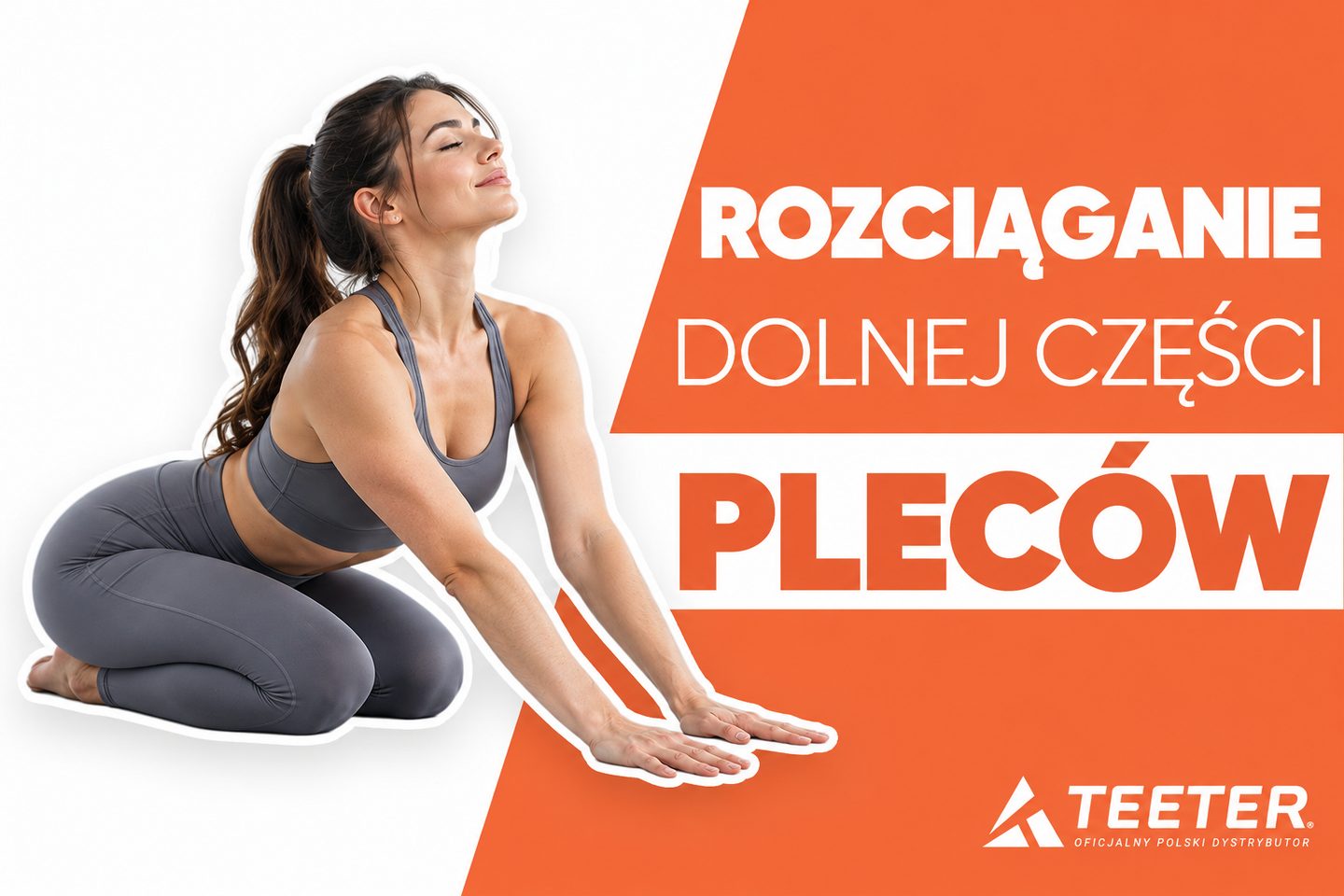
Finally, lie on your back for a moment with your knees bent or sit comfortably, take a few calm breaths and do some gentle stretching. You will find examples of gentle exercises in our article on lower back stretching. Get up from the floor slowly, rolling onto your side.
How to give someone else a back massage?
A partner massage at home is above all a way to relax and feel close, not a therapeutic procedure. Professional therapeutic massage is performed by people with appropriate training. If you want to give someone close to you a relaxing back massage, follow a few general rules.
Preparation
- The person being massaged lies face down on a firmer, stable surface - a bed with a soft mattress is less comfortable for both of you. A thin pillow can be placed under the chest or stomach, and a rolled-up towel under the ankles.
- The room should be warm. Cover the parts of the body you are not massaging with a towel.
- Use a small amount of massage oil or lotion, warmed in your hands. Check beforehand that the person being massaged is not allergic to any of the ingredients.
- Take off rings and your watch, and make sure your nails are short.
Basic strokes in a relaxing massage
| Stroke | How to do it | When |
|---|---|---|
| Stroking | With your whole palms, smoothly, from the lower back upward along the spine (not on it) and out to the sides | At the beginning and end, and between other strokes |
| Friction | Small circular movements on the muscles with your fingertips or the heel of your hand | After warming up the skin with stroking |
| Kneading | Gently grasping and moving the tissue, e.g. on the top of the shoulders | In places where the muscles are more "fleshy" |
| Calming | Increasingly slower and lighter stroking, finishing by resting your hands calmly | At the end |
What to avoid in a partner massage
- pressing on the spine and the spinous processes - massage the muscles on both sides;
- strong pressure on the kidney area and the lower back;
- pressure on the front and sides of the neck;
- sudden movements, "cracking" joints, attempts to realign the spine - this is not a job for someone without training;
- continuing when the person being massaged says it hurts.
Talk to each other during the massage. The best guide to how much pressure to use is feedback from the person being massaged.
When should you not get a back massage? General contraindications
Both self-massage and partner massage have situations in which it is better to skip them or to talk to a doctor first. General contraindications include:
- fever, infection, generally feeling unwell;
- a recent back injury - a fall, bruise or accident;
- skin changes, wounds, burns or skin inflammation at the massage site;
- blood clotting disorders, taking anticoagulants, a tendency to bruise;
- osteoporosis - risk of fractures with strong pressure;
- cancer - the decision about massage is made by the treating doctor;
- pregnancy - it is worth discussing the type of massage with the doctor managing your pregnancy;
- recent surgery on the back or chest;
- unexplained, severe or worsening pain.
When should back pain send you to a doctor urgently?
Massage is not the answer to every back pain. Urgent help (112 or 999, the ER) is needed for, among other things: pain after an injury, pain with fever, numbness around the groin, sudden problems with urination or bowel movements, worsening leg weakness, and back pain combined with chest pain and shortness of breath. Make an appointment with a doctor as soon as possible if the pain lasts several weeks, gets worse, wakes you up at night, radiates to your leg or arm, or is accompanied by unintentional weight loss. You can read more about caring for your lower back day to day in our article on the lumbar spine.
How often should you do a back self-massage?
There is no single rule. Many people reach for self-massage a few times a week or whenever they feel stiff after a day at work. Short sessions of a few minutes are usually more convenient than one long session. More important than frequency is that the massage is comfortable and does not cause pain.
Self-massage pairs well with other daily habits: breaks from sitting every 30-60 minutes, walks, general physical activity and an ergonomic workstation. People who sit a lot sometimes also look for lumbar support for their chair - one example is the contoured Teeter Core Restore cushion, which you can place behind your back while sitting.
Teeter accessories for self-massage and stretching
In the recovery and massage section you will find Teeter accessories that can complement your home self-massage:
- Teeter Neck Restore - a neck support with a rotating base on a bearing and a grooved rubber insert. It is used lying down, on its own or attached to a Teeter inversion table.
- Teeter Neck Relax & Restore Duo - the same rotating base with two interchangeable inserts: a flexible, gently contoured one and a grooved rubber one.
- Teeter Core Restore - a cushion with raised ribbing, for lumbar support while sitting and for balance exercises; includes an exercise guide.
These are accessories, not medical devices. They are not intended for treatment and should be used as described on the product page. If you have symptoms, consult a doctor or physical therapist first. You will find other add-ons in the accessories section.
Frequently asked questions
How can you give yourself a back massage without anyone's help?
The easiest way is with a ball against the wall: stand with your back to the wall, place the ball next to your shoulder blade and gently bend your knees, moving it over the muscles. You can also use a foam roller while lying on the floor, a double roller or a hook-shaped massager. Always avoid the spine itself and massage without pain.
Can you massage the spine?
Do not press directly on the spine or the spinous processes - neither during self-massage nor in a partner massage. Massage the muscles on both sides of the spine. If you have a spinal condition, discuss the type of massage with a doctor or physical therapist.
How long should a back self-massage last?
A few minutes for the whole session is usually enough, 1-2 minutes per area. Longer pressure in one spot is not necessary and can be unpleasant when the pressure is strong.
Is self-massage of the lower back safe?
The lumbar region has no ribs to protect the organs, so do not lie on a roller in this area with your full body weight. If you want to massage your lower back, do it very gently, e.g. with a ball against the wall using minimal pressure. If you have pain in this area, consult a doctor first.
What oil should you use for a back massage?
For a relaxing partner massage, ordinary baby oil or massage lotion is enough. Choose a product without strong fragrances, check the ingredients for allergens and use only a small amount. For self-massage with accessories, oil is usually not needed.
Is back massage suitable for seniors?
A gentle, relaxing massage can be pleasant at any age, but older people more often have osteoporosis, blood clotting disorders or take anticoagulants, which call for caution. Ask a doctor first. Self-massage on the floor can be difficult for seniors - a ball against the wall is more convenient.
When is it better to see a specialist for a massage?
When you have chronic or recurring symptoms, have had an injury or surgery, have a diagnosed spinal condition or do not know what is causing the pain. In that case, see a doctor first, and a specialist will decide on the type of massage or therapy after an examination.
Are Teeter neck accessories medical devices?
No. The Teeter Neck Restore and the Neck Relax & Restore Duo set are accessories for self-massage and stretching. They are not intended for treatment. Use them as described on the product page, and if you have symptoms, consult a doctor first.
Recommended products
- Teeter Neck Restore - a neck support with a grooved rubber insert, for self-massage while lying down.
- Teeter Neck Relax & Restore Duo - a set with a rotating base and two interchangeable inserts.
- Teeter Core Restore - a contoured cushion for lumbar support while sitting and for balance exercises.