Do you run, go to the gym or spend eight hours at a desk, and increasingly feel that your body is “stiff” - it is harder to reach your shoelaces, twist around when parking or do a deep squat? That is when two terms come up: flexibility and mobility. In this article we explain how they differ, how to approach stretching sensibly - with a warm-up, without pain and without bouncing - how to plan it across the week alongside running, strength training and desk work, and where an inversion table fits into all of this. No promises of “miraculous flexibility in 30 days” - instead, general rules, a table and answers to the most common questions.
This article is for informational purposes only and does not replace medical advice. If you have symptoms, consult a doctor.
How does flexibility differ from mobility?
These words are often used interchangeably, but they describe slightly different things:
- Flexibility - the ability of muscles and other soft tissues to lengthen. We talk about it when, for example, someone sitting down reaches their feet with the help of gravity or their hands.
- Mobility - the ability to move actively and in a controlled way through a given range of motion. What counts is not only how far you can “reach”, but whether you can hold the position and maintain strength within that range - e.g. do a deep squat with a straight back.
In practice, the two complement each other. A range of motion you do not use every day is easy to “lose”, and a range you cannot control with muscle strength is hard to use in training. That is why many people combine stretching with movement exercises rather than treating it as a separate, isolated activity.
Why does range of motion matter every day?
You do not have to be a gymnast for range of motion to be useful. You need it when you put a suitcase on a shelf, tie your shoes, get into a car, look over your shoulder or lift a child off the floor. In many people this range narrows over time - usually not because of one cause, but because of a combination of habits:
- prolonged sitting in the same position,
- repetitive movement - e.g. running without other forms of activity,
- training through a partial range - e.g. only half squats,
- little movement overall, especially in weeks with a lot of work.
Range of motion is very individual and also depends on body build, age and past injuries. Do not compare yourself to others - compare yourself to how you were a few weeks ago.
What are the general rules for safe stretching?
Whether you stretch after running, before strength training or after a day at your desk, it is worth sticking to a few simple rules:
- Warm up first. A few minutes of walking, loose arm and hip circles or light training will prepare your body for exercise. Stretching “cold” is usually less comfortable.
- No pain. Stretching should give a feeling of a gentle “pull”. Sharp, stabbing or radiating pain is a signal to stop.
- No bouncing. Move into the position slowly and hold it instead of “bouncing” in it.
- Calm breathing. Do not hold your breath - exhaling helps you relax into the position.
- Moderate duration. In static exercises, the position is usually held for 10 to 30 seconds and repeated 2-3 times.
- Symmetry. Stretch both sides of the body, even if one seems “stiffer”.
- Consistency over intensity. A few short sessions a week are easier to maintain than one long one every now and then.
If you have symptoms, have had an injury or surgery, or have a diagnosed joint or spine condition, consult a doctor or physical therapist first. General rules from the internet do not replace an individually tailored plan.
Static or dynamic stretching - what and when?
Two approaches are most commonly distinguished, and they are worth using at different times:
Dynamic stretching
These are controlled movements through a full, comfortable range: arm and hip circles, leg swings, lunges with torso rotation, bodyweight squats. Many people use them as part of a warm-up before running or strength training, because they prepare the body for movement rather than “calming” it down.
Static stretching
This means holding a position for a set time, e.g. a seated forward bend, a calf stretch against a wall, a lying “figure four” stretch. It is most often done after training, in the evening or as a separate, calm session on a day without training.
| Type | Most often when | How long | Examples |
|---|---|---|---|
| Dynamic | in the warm-up before training | 5-10 min, 8-10 repetitions of a movement | hip circles, leg swings, lunges with rotation |
| Static | after training, in the evening, on rest days | 10 to 30 s per position, 2-3 times | stretching the calves, hamstrings, glutes |
| Mobility exercises | in the warm-up or as a separate session | a few minutes, calm repetitions | supported deep squat, cat-cow, thoracic rotations |
| “Movement breaks” | during the workday | 1-3 min every 30-60 min of sitting | standing up, a few steps, reaching your arms overhead |
The values in the table are approximate. Do all exercises without pain, and if you have symptoms, consult a doctor or physical therapist first.
How to maintain mobility when running?
Running is a repetitive movement in a fairly narrow range - the hips, knees and ankles work mainly in one plane. A few general tips that many runners include in their routine:
- A dynamic warm-up before running: walking, jogging, hip circles, leg swings, a few lunges.
- Calm stretching after running: calves, hamstrings and quadriceps, hip flexors, glutes.
- Movement in other planes: exercises with torso rotation, side lunges - as a complement to running.
- Recovery days: a short stretching or self-massage session instead of another run.
How to maintain mobility with strength training?
In strength training, range of motion translates directly into technique - squat depth, deadlift position or overhead press. General rules:
- A warm-up with mobility exercises and light sets of the exercise you are about to do.
- A full, controlled range in exercises - without “forcing” the range with weight.
- Static stretching after training or in a separate session.
- Technique before weight - if your range of motion limits your technique, it is worth talking to a trainer.
How to maintain mobility with a desk job?
With office work, the biggest challenge is not the lack of one exercise, but many hours in one position. That is why spreading movement throughout the day helps most:
- Breaks every 30-60 minutes - stand up, walk around, reach your arms up, do a few side bends.
- Changing position - take some phone calls standing up, work at a height-adjustable desk if you can.
- Simple desk exercises - arm circles, seated torso rotations, a chest stretch in a doorway.
- Movement after work - a walk, a bike ride, a short stretching session in the evening.
If you want to move while sitting too, some people choose seated trainers such as the Teeter FreeStep LT1 or FreeStep LT3 - this is training equipment, not medical equipment. We write more about a tight back after a day at your desk in our article on stretching the lower back.
How to plan stretching across the week?
The hardest part of stretching is not the exercise itself, but actually doing it. A few ways that make consistency easier:
- Link it to something regular. Stretching after every run, after training or always after your evening shower is easier to remember than “whenever I find the time”.
- Short but often. Five to ten minutes a few times a week is easier to maintain than an hour-long session once a month.
- Choose a few exercises. You do not have to stretch everything every time. Focus on the areas you feel most after your type of activity - for runners, e.g. the calves and hamstrings; for people working at a desk, the hip flexors, chest and thoracic spine.
- A place to exercise. A mat laid out in a permanent spot reminds you to exercise and lets you start without any preparation.
- Note how you feel. It is not about measuring centimeters, but about whether the exercises are comfortable and whether you want to continue them.
A sample week for someone who runs twice a week and works at a desk could look like this: on running days, a dynamic warm-up before the run and a few minutes of static stretching after it; on workdays, movement breaks every hour; and on the weekend, a longer, calm session of mobility exercises on a mat. This is only an illustration - tailor the plan to yourself.
Where does an inversion table fit into this?
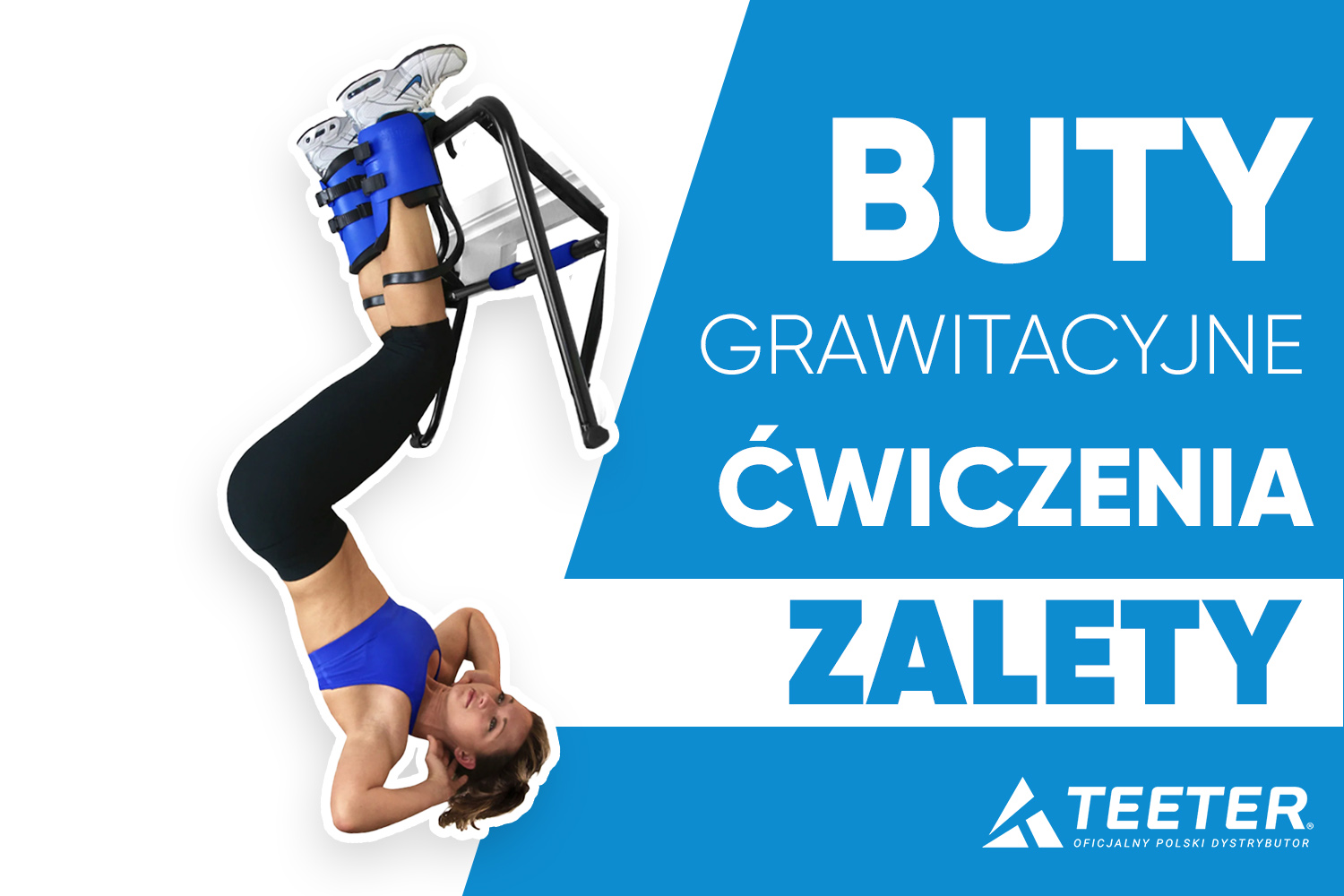
An inversion table does not replace stretching, training or movement during the day, and we do not present it as a way to “increase flexibility”. Teeter FitSpine X1, X3, LX9 and EP-560 tables are medical devices intended for home spinal traction while stretching the paraspinal muscles and soft tissues. Consult a doctor before use - inversion has contraindications, including high blood pressure, a previous stroke, glaucoma, osteoporosis, hernias, pregnancy and recent surgery (full list in the manual). This is a medical device. Use it in accordance with the instructions for use or the label.
The Teeter manual describes how to use it: start at a small angle (20-30°) with short, 1-2-minute sessions, gradually extend them to about 3-5 minutes, and stretch gently using the table's handles. It does, however, prohibit sudden movements and the use of weights, resistance bands and other equipment on the table. You will find the details in our guide how to use an inversion table, and the differences between the models in our FitSpine X1, X3 and LX9 comparison.
When to stop stretching and see a doctor?
Stop the exercise if you experience sharp, stabbing or increasing pain, pain radiating to the arm or leg, numbness, tingling or weakness, dizziness or shortness of breath. Consult a doctor when:
- the restricted movement appeared suddenly, e.g. after an injury or a fall,
- a joint is swollen, red or feels hot,
- symptoms do not go away at rest or wake you up at night,
- numbness, muscle weakness or sensory disturbances appear,
- pain or stiffness persists for several weeks despite changing your habits.
Do not perform exercises meant to “realign” or “unlock” joints on your own - that is a job for a specialist.
Frequently asked questions
How often should I stretch?
Many people stretch a few times a week or daily, for a short time. Consistency and doing the exercises without pain matter more than the length of the session.
Should I stretch before running?
Before a run, many people choose a warm-up with dynamic exercises and leave longer holds for after the run or for a separate session.
How long should I hold a stretch?
In static stretching, usually 10 to 30 seconds, 2-3 times per side. The position should give a feeling of a gentle pull, not pain.
Should stretching hurt?
No. Sharp or radiating pain is a signal to stop the exercise. If the pain keeps coming back, consult a doctor or physical therapist.
Is stretching in the evening enough if I have a desk job?
An evening session is a good element, but with many hours of sitting, short movement breaks during the day are also important - every 30-60 minutes.
Does an inversion table increase flexibility?
We do not present the table as a way to improve flexibility. Teeter FitSpine tables are medical devices for home spinal traction while stretching the paraspinal muscles and soft tissues, and they have contraindications. Whether you can use one is decided by a doctor.
Do you lose range of motion with age?
In many people, range of motion changes with age, but habits and the amount of movement also matter a lot. Regular activity suited to your abilities is a sensible part of staying fit at any age. If you have joint complaints, consult a doctor.
Can I stretch every day?
Many people do gentle stretching every day. Listen to your body - if you feel tired or uncomfortable, take a day off or shorten the session.
Recommended products
- Teeter FreeStep LT1 - a cross trainer for arm and leg exercises in a seated position.
- Teeter FreeStep LT3 - the same mechanism with a ComfortSelect seat, SoftStep pedals and SureGrip handles.
- Recovery and massage - a massage ball, self-massage stick and other Teeter accessories for recovery days.
- Teeter Core Restore - a wedge cushion for active sitting and balance exercises.