This article is for informational purposes only and does not replace medical advice. If you have any complaints, consult your doctor.
After a day at the desk, several hours behind the wheel or a session of yard work, the lower back can make itself felt with a sense of stiffness and tension. Many people then search online for lower back stretches - and come across promises like "get rid of the pain in 5 minutes". We approach the topic differently. In this article we explain why the lumbar region can feel stiff, in which situations you need to see a doctor urgently instead of exercising, what diagnosis looks like, and what the general rules of safe stretching are. You will also find step-by-step descriptions of eight gentle exercises as part of everyday physical activity, a summary table and a list of signals that mean you should stop an exercise.
What is the lower back and why can it feel stiff?
The lower back is primarily the lumbar spine - five vertebrae between the chest and the sacrum - together with the surrounding muscles, ligaments and fascia. This area carries the weight of the upper body every day while also allowing you to bend, twist and straighten. Not only the paraspinal muscles work here, but also the abdominal muscles, glutes and hip flexors, which attach around the pelvis and spine.
A feeling of stiffness or tension in this area is very common. For many people it is linked to everyday habits, including:
- prolonged sitting without breaks - at a desk, in the car, in front of the TV,
- little movement during the day,
- sudden exertion the body is not used to - e.g. lifting, moving house, yard work,
- holding one position for a long time - e.g. leaning over a sink or desk,
- fatigue and stress, during which many people reflexively tense their muscles.
Lower back complaints can, however, have very different causes, including ones that require treatment. That is why, before you start exercising on your own, read the next section.
When should you see a doctor urgently instead of exercising?
There are symptoms that doctors call "red flags". If any of them apply to you, do not stretch on your own - contact a doctor, and in the case of sudden neurological symptoms, call for help or go to the emergency room:
- back pain after an injury - a fall, an accident, a blow,
- numbness, tingling or weakness in the legs, especially if worsening, foot drop, difficulty walking,
- bladder or bowel problems, incontinence or urinary retention,
- numbness in the groin, buttock area or inner thighs,
- pain accompanied by fever, chills or feeling generally unwell,
- unexplained weight loss,
- pain that does not go away at rest and at night or keeps getting worse,
- pain radiating into the leg, especially below the knee,
- complaints in a person with a history of cancer, osteoporosis or long-term steroid use.
It is also worth seeing a doctor if your complaints last longer than a few weeks, keep coming back or make everyday activities difficult. Some symptoms cannot be assessed on your own - and there is nothing wrong with asking a specialist for help.
How are lower back complaints diagnosed?
The first step is usually a visit to a primary care doctor. The doctor takes a history - asking how long the complaints have lasted, what makes them worse, whether they appeared after exertion or an injury, and whether other symptoms accompany them - and examines the patient, assessing, among other things, spinal mobility, muscle strength, sensation and reflexes.
Depending on the results of the examination, the doctor may recommend observation and general activity advice, order imaging (e.g. X-ray, MRI) or laboratory tests, or refer you to a specialist (e.g. an orthopedist or neurologist) or to a physical therapist. The doctor decides whether any tests are needed and which ones - getting a scan "just in case" is not always necessary.
A physical therapist, in turn, can assess how you move, select exercises for the individual and show the correct technique. The exercises described below are general examples - they do not replace an individually tailored program.
How to stretch your lower back safely - general rules
If you have no worrying symptoms and your doctor sees no contraindications, gentle stretching can be part of your everyday physical activity. A few rules worth following with every exercise:
- No pain. Stretching should give a feeling of gentle "pulling", not pain. If you feel pain, stop.
- Slowly and without bouncing. Ease into the position calmly and hold it instead of "bouncing" in it.
- Breathe. Do not hold your breath. Calm, even breathing makes it easier to hold the position.
- A short warm-up. A few minutes of walking or loose movement before stretching will prepare your body for exercise.
- Moderate duration. In static exercises, the position is usually held for 10 to 30 seconds and repeated 2-3 times.
- A comfortable surface. Exercise on a mat or carpet, in loose clothing.
- Listen to your body. Range of motion is individual. Do not compare yourself with others and do not force it.
Which lower back stretches? 8 exercises step by step
Below we describe eight gentle exercises that often appear in general stretching routines. Do each one without pain, and if you have any complaints, consult a doctor or physical therapist first. You do not have to do all of them - choose the ones that are comfortable for you.
1. Knee-to-chest stretch
- Lie on your back on a mat, knees bent, feet on the floor.
- Grab one knee with both hands (under the knee or on the shin) and slowly pull it toward your chest. The other leg stays bent on the floor.
- Hold the position for 15-30 seconds, breathing calmly. Return and switch legs.
- Variation: pull both knees in at the same time.
Do the exercise without pain. If you have any complaints, consult a doctor or physical therapist first.
2. Cat-cow (cat back and arch)
- Get on all fours: hands under your shoulders, knees under your hips.
- As you exhale, slowly round your back, pushing your spine up and your head down, like a cat.
- As you inhale, slowly return to a neutral position and gently arch your back the other way, lifting your head slightly.
- Do 8-10 calm repetitions within a range that is comfortable for you.
The movement should be smooth and within a comfortable range. Do it without pain, and if you have any complaints, consult a doctor or physical therapist first.
3. Child's pose
- Kneel and sit back on your heels; you can spread your knees slightly.
- Slowly lean your upper body forward, sliding your arms out in front of you along the floor until your forehead comes close to the mat.
- Hold the position for 20-30 seconds, breathing calmly.
- If your buttocks do not reach your heels, place a cushion underneath.
Do it without pain, including in your knees. If you have any complaints, consult a doctor or physical therapist first.
4. Lying spinal twist
- Lie on your back, knees bent, feet on the floor, arms spread out to the sides.
- Slowly lower both knees to one side, keeping your shoulders on the floor. You can turn your head the opposite way.
- Lower your knees only as far as is comfortable. Hold for 15-30 seconds.
- Return to the center and repeat on the other side.
The movement should be slow, without "dropping" your knees. Do it without pain, and if you have any complaints, consult a doctor or physical therapist first.
5. Lying glute stretch ("figure four")
- Lie on your back, knees bent, feet on the floor.
- Place your right ankle on your left knee so that your legs form the shape of the number 4.
- Grab your left thigh with both hands and slowly pull it toward your chest until you feel a stretch in your right buttock.
- Hold for 15-30 seconds and switch sides.
Do it without pain, including in your knee and hip. If you have any complaints, consult a doctor or physical therapist first.
6. Lying pelvic tilt
- Lie on your back, knees bent, feet on the floor hip-width apart.
- As you exhale, gently tighten your abdominal muscles and "press" your lower back into the floor, tucking your pelvis slightly.
- Hold for a few seconds, then relax and return to the starting position.
- Repeat 8-10 times.
This is a small, controlled movement. Do it without pain, and if you have any complaints, consult a doctor or physical therapist first.
7. Hip raise (bridge)
- Lie on your back, knees bent, feet on the floor hip-width apart, arms alongside your body.
- Tighten your glutes and slowly lift your hips until your torso and thighs form a straight line. Do not overarch your lower back.
- Hold for a few seconds and slowly lower your hips, one vertebra at a time.
- Repeat 8-10 times.
This exercise is more activating than stretching - it engages the glutes and the back of the thighs. Do it without pain, and if you have any complaints, consult a doctor or physical therapist first.
8. Kneeling hip flexor stretch
- Kneel on one knee (place a cushion under it), put the other foot in front of you, knee over ankle.
- Straighten your upper body and gently tuck your pelvis, then slowly shift your hips slightly forward until you feel a stretch at the front of the hip of the leg you are kneeling on.
- Do not arch your back. Hold for 15-30 seconds and switch sides.
- If you have trouble with balance, hold on to a chair or wall.
Do it without pain, including in your knee. If you have any complaints, consult a doctor or physical therapist first.
Table: lower back stretches at a glance
| Exercise | Starting position | Time or repetitions | What to watch out for |
|---|---|---|---|
| Knee-to-chest | lying on your back | 15-30 s per side, 2-3 times | do not lift your head, pull gently |
| Cat-cow | on all fours | 8-10 smooth repetitions | move within a comfortable range, no jerking |
| Child's pose | sitting on your heels | 20-30 s, 2-3 times | comfort in your knees, cushion under your buttocks |
| Lying twist | lying on your back | 15-30 s per side | shoulders on the floor, slow movement |
| "Figure four" | lying on your back | 15-30 s per side | no pressure on the knee |
| Pelvic tilt | lying on your back | 8-10 repetitions | small, controlled movement, breathing |
| Bridge | lying on your back | 8-10 repetitions | do not overextend your lower back |
| Kneeling hip flexor stretch | half-kneeling | 15-30 s per side | no back arching, cushion under the knee |
These are general guideline values. If a physical therapist or doctor has recommended a different way of doing the exercises, follow their advice.
When should you stop an exercise?
Stretching should not hurt. Stop the exercise immediately and do not return to it without consulting a professional if:
- you feel sharp, stabbing or increasing pain,
- the pain starts radiating into your buttock or leg,
- you feel numbness, tingling or weakness in your legs,
- you feel dizzy, have heart palpitations or shortness of breath,
- your complaints are noticeably worse after exercising than before.
In that situation, contact a doctor. If any symptoms from the "red flags" list appear - e.g. bladder problems, numbness in the groin or sudden leg weakness - urgent medical help is needed.
How to look after your lower back every day - activity and ergonomics
Stretching is only one element. Everyday habits matter a lot. A few general rules worth adopting:
At your desk
- Get up and take a short movement break every 30-60 minutes.
- Adjust your chair so that your feet rest flat on the floor and your knees are roughly at hip height.
- Set your monitor at eye level and your keyboard so that your elbows are bent at roughly a right angle.
- Change position - even the best-adjusted chair will not replace movement.
When lifting
- Lift objects with bent knees, keeping them close to your body.
- Avoid bending and twisting your torso at the same time while carrying a load.
- Split heavy items into smaller loads or ask someone for help.
During the day
- Try to walk every day - it is a simple form of activity for most people.
- Choose an activity you enjoy and can repeat regularly.
- If you have a bigger effort planned (moving house, yard work), spread it out over time.
What about an inversion table?
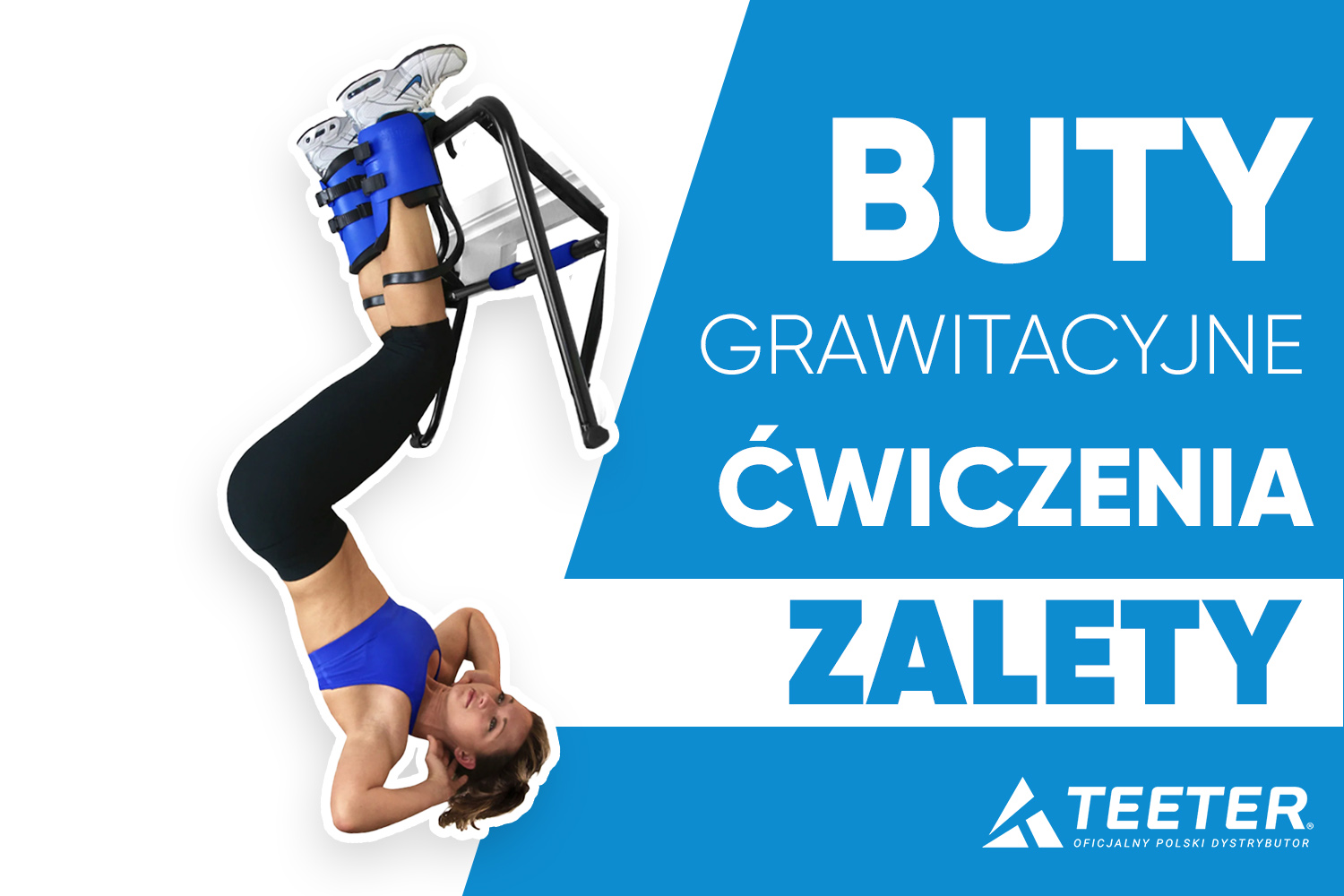
Teeter FitSpine inversion tables are medical devices for home spinal traction with simultaneous stretching of the paraspinal muscles and soft tissues. Consult your doctor before use - inversion has contraindications, including hypertension and other circulatory conditions, a previous stroke, glaucoma and retinal detachment, osteoporosis, fractures, hernias, pregnancy and recent surgery (full list in the manual). This is a medical device. Use it in accordance with the instructions for use or the label.
You can read more about contraindications in the article who an inversion table is for, and about use in accordance with the manual in the guide how to use an inversion table. You will find the FitSpine X1, FitSpine X3 and FitSpine LX9 models in the inversion tables category. In the recovery and massage section you will find Teeter accessories, including the Teeter Core Restore lumbar cushion. These are accessories, not medical devices - they are used as described on the product page.
Frequently asked questions
Is lower back stretching for everyone?
No. If you have acute complaints, symptoms from the "red flags" list, have had an injury or surgery, or have a diagnosed spinal condition, consult a doctor or physical therapist first. The exercises in this article are general examples of activity, not a program for a specific person.
How long should you hold a stretching position?
In static exercises, the position is usually held for 10 to 30 seconds and repeated 2-3 times. Dynamic exercises, such as cat-cow, are done in a few to a dozen or so smooth repetitions.
How often can you stretch?
Many people do gentle stretching daily or several times a week, e.g. after a long period of sitting. Regularity and doing the exercises without pain matter more than the length of the session.
Should stretching hurt?
No. Proper stretching gives a feeling of gentle "pulling". Sharp, stabbing or radiating pain is a signal to stop the exercise and consult a doctor.
When should you see a doctor about lower back pain?
Urgently - with pain after an injury, numbness or weakness in the legs, bladder or bowel problems, numbness in the groin, fever, unexplained weight loss and night pain. Routinely - when complaints last several weeks, keep coming back or make everyday activities difficult.
Is it better to exercise in the morning or in the evening?
There is no single rule. Some people feel stiffer in the morning and prefer a short warm-up before stretching, others prefer to exercise in the evening or after a day at the desk. Choose a time that is easy to fit into your daily routine.
Can stretching replace a visit to a physical therapist?
No. A physical therapist individually assesses how you move and selects exercises for the specific person. General exercises from the internet do not replace a diagnosis or an individual program.
Is an inversion table a solution for back pain?
We do not present the table as a solution for any complaint. Teeter FitSpine tables are medical devices for home spinal traction with simultaneous stretching of the paraspinal muscles and soft tissues, and inversion has contraindications. Your doctor decides whether you can use one.
Recommended products
- Teeter FitSpine X3 - an inversion table with a 20/40/60° angle limiter and the Deluxe EZ-Reach ankle lock.
- Teeter FitSpine LX9 - the flagship table with the arched LX frame, a step-up platform and a storage caddy.
- Teeter Core Restore - a lumbar cushion from the Teeter range, an accessory (details on the product page).