This article is for informational purposes only and does not replace medical advice. If you have symptoms, consult a doctor.
It is the end of the workday, you get up from your desk or out of your car and feel that your back is “stiff”, you cannot turn your neck freely and something is pulling between your shoulder blades? A tight back after a day at work is a very common feeling - for people working at a computer, behind the wheel, but also standing or doing physical work. In this article we do not promise quick fixes or “exercises that will make the pain go away”. Instead, we have gathered simple things you can do every day: calm breathing, breaks from sitting, movement during the day, heat, gentle stretching and self-massage. We also describe the signals that mean you need to see a doctor instead of acting on your own.
Where does the feeling of a tight back after work come from?
Your back muscles work all day - they maintain posture, stabilize the torso and move the shoulders and head. For many people, the feeling of tension or stiffness at the end of the day is linked to everyday habits, including:
- many hours in one position - at a desk, in a car, on a production line,
- leaning toward the screen - head pushed forward, rounded shoulders,
- repetitive movements - e.g. working with one hand, lifting in the same way,
- little movement during the day and after work,
- stress and rushing - which make many people instinctively raise their shoulders and tense their muscles,
- fatigue and too little sleep.
However, back complaints can have very different causes, including ones that require diagnosis and treatment. That is why, before you move on to the tips below, check the list of red flags.
When does a tight back require a doctor's visit?
If any of the following symptoms apply to you, do not act on your own - contact a doctor, and with sudden neurological symptoms or chest pain, call for help or go to the ER:
- back pain after an injury - a fall, an accident, a blow,
- chest pain, shortness of breath, pain radiating to the arm or jaw, palpitations - these are symptoms that may have a cardiac cause,
- numbness, tingling or weakness in the arms or legs,
- problems controlling the bladder or bowels, numbness in the groin area,
- pain with fever, chills or unexplained weight loss,
- pain that does not go away at rest or at night or keeps getting worse,
- symptoms in a person with a history of cancer, with osteoporosis or on long-term steroid medication.
It is also worth seeing a doctor when symptoms last several weeks, come back regularly or interfere with work and sleep. The doctor will take a history and examine you, and if needed, order tests or refer you to a specialist or physical therapist.
How can breathing help you unwind after work?
Calm breathing is not a “back exercise”, but many people treat it as a way to unwind after an intense day - and along the way notice how much tension they carry in their shoulders. A simple practice:
- Sit comfortably or lie on your back with your knees bent.
- Place one hand on your belly and the other on your chest.
- Breathe in slowly through your nose so that mainly the hand on your belly rises.
- Breathe out calmly through your mouth, a little longer than the inhale lasted. As you exhale, consciously lower your shoulders.
- Repeat for 2-5 minutes.
If you feel dizzy during breathing exercises, return to your normal breathing.
How to take breaks from sitting?
With a desk job, the biggest impact comes not from one exercise in the evening, but from spreading movement throughout the day. A few practical ways:
- Stand up every 30-60 minutes for 1-3 minutes - walk around, drink some water, reach your arms up.
- Change position - take some phone calls standing up, and if you have a height-adjustable desk, change position during the day.
- Set a reminder - on your phone or computer. Without one, it is easy to sit for several hours.
- Workstation ergonomics - monitor at eye level, feet flat on the floor, knees roughly at hip level, elbows bent at roughly a right angle.
- In the car - on longer trips, plan stops and get out of the car for a moment.
When sitting, some people use lumbar support or active-sitting cushions, such as the Teeter Core Restore cushion. It is an accessory, not a medical device - use it as described on the product page.
What kind of movement is worth adding to your day?
Movement is one of the simplest elements of looking after your back in everyday life. It does not have to be a gym workout:
- Walking - e.g. part of your commute on foot, a walk during your lunch break or after work.
- Stairs instead of the elevator, if that is comfortable for you.
- An activity you enjoy - cycling, swimming, dancing, group classes. What counts is that you will keep doing it.
- General fitness exercises suited to your fitness level.
- Movement while seated - if it is hard for you to leave the house, some people choose trainers for seated arm and leg exercise, e.g. the Teeter FreeStep LT1. This is training equipment, not medical equipment.
Can heat help you relax?
After work, many people reach for a warm shower, a bath or a hot water bottle as a way to rest. If you want to use heat, remember a few rules:
- the temperature should be pleasantly warm, not scalding,
- do not put a hot water bottle directly on your skin - use a towel or a cover,
- do not fall asleep with a hot water bottle or an electric heating pad,
- be careful if you have sensory disturbances, diabetes, circulatory diseases or are pregnant - in that case, ask a doctor,
- do not apply heat to a fresh injury, swelling or a red, hot area - that is a situation for a consultation.
What gentle stretching can you do after work?
A few simple exercises that often appear in general stretching routines. Do each one without pain, and if you have symptoms, consult a doctor or physical therapist first.
Shoulder rolls
Standing or sitting, slowly roll your shoulders backward in circles 8-10 times, then forward. Move within a comfortable range, without jerking. Do it without pain.
Overhead reach
Stand up, interlace your fingers and slowly raise your arms above your head, as if you wanted to reach the ceiling. Hold for a few seconds, breathing calmly. Repeat 3-5 times. Do it without pain.
Side bend
Standing, raise one arm above your head and slowly lean your torso to the opposite side until you feel a gentle stretch along your side. Hold for 15-20 seconds, switch sides. Do it without pain.
Doorway chest stretch
Stand in a doorway, rest your forearms on the frame at shoulder height and take a small step forward until you feel a stretch across the front of your chest. Hold for 15-30 seconds. Do it without pain.
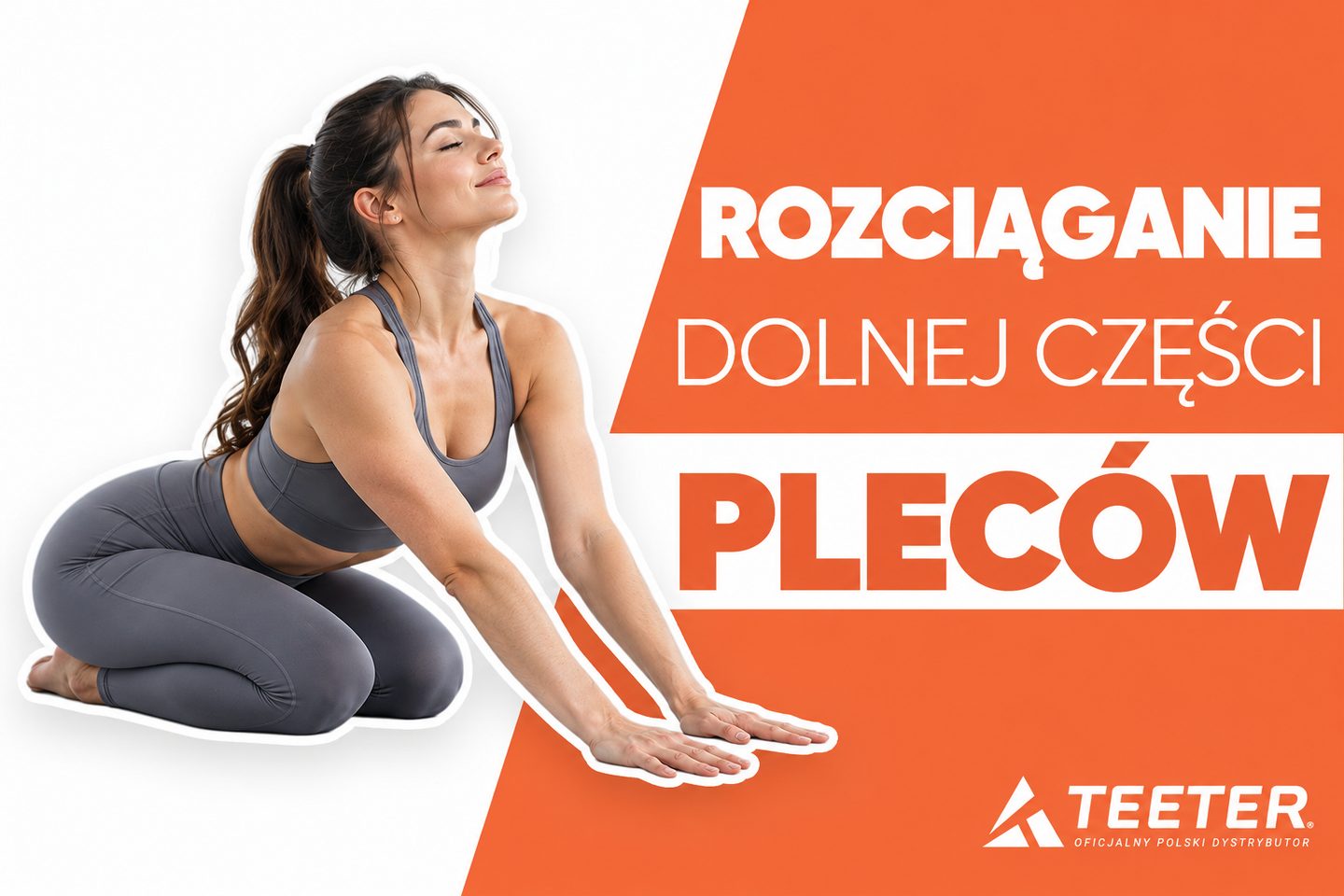
Cat-cow
On all fours, round your back as you exhale, and return to a neutral position as you inhale. 8-10 smooth repetitions within a comfortable range. Do it without pain.
You will find more exercises with step-by-step descriptions in our articles on stretching the lower back and on tight neck muscles. Do not perform movements meant to “realign” or “unlock” the spine or joints on your own - that is a job for a specialist.
Is self-massage with accessories a good idea?
Many people treat self-massage as part of their evening rest. Simple accessories serve this purpose, and you will find them in our recovery and massage section: a massage ball, a self-massage stick and the Teeter Neck Relax & Restore Duo - a neck stretching accessory. These are accessories for self-massage and relaxation, not medical devices - they do not treat any conditions.
If you want to use them:
- Gently - the pressure should be comfortable, without pain.
- Briefly - a few minutes per area is enough.
- Avoid the spine, bones and joints - work on the muscles beside them, not directly on the vertebrae.
- Do not massage areas with bruising, swelling, wounds, skin changes, varicose veins or the area of a fresh injury.
- Ask a doctor if you take anticoagulants, have osteoporosis, are pregnant or have other chronic conditions.
- Use them as described on the product page.
Which evening and night-time habits are worth rethinking?
What you do after work also matters for how you feel the next day. A few general tips:
- Do not swap your office chair for the couch for the whole evening. After a day of sitting, at least a little movement helps - a walk, housework, a short exercise session.
- Phone and laptop on the couch - looking down for a long time at a screen held on your lap is the same position as at your desk, only less comfortable. Take breaks and hold the screen higher.
- A comfortable sleeping position - a pillow suited to the position you sleep in, so that your head is neither strongly bent nor tilted back.
- A regular daily rhythm - many people notice that they feel tension more clearly when they are tired and short on sleep.
- Stress - if you notice that you raise your shoulders and clench your jaw when stressed, try a short breathing break a few times a day.
An after-work evening plan - summary
| Element | When | How long | What to watch out for |
|---|---|---|---|
| Breaks from sitting | during work, every 30-60 min | 1-3 min | set a reminder |
| A walk or other movement | during a break or after work | as you are able, e.g. 20-30 min | a comfortable pace |
| Calm breathing | after getting home | 2-5 min | if you feel dizzy, return to normal breathing |
| Warm shower or hot water bottle | in the evening | 10-15 minutes | no scalding, not on a fresh injury |
| Gentle stretching | in the evening | 5-10 min | without pain and without bouncing |
| Self-massage with accessories | in the evening | a few minutes per area | gently, away from the spine and joints |
These are general suggestions, not a program for a specific person. Choose what is comfortable for you and easy to fit into your day.
Frequently asked questions
Why does my back hurt after working at a desk?
For many people, the feeling of tension is linked to many hours in one position, leaning toward the screen and little movement. However, symptoms can have different causes - if they persist or get worse, consult a doctor.
How often should I take breaks from sitting?
A good general rule is a short movement break every 30-60 minutes - standing up, a few steps, reaching your arms up.
Is heat good for a tight back?
Many people treat a warm shower or a hot water bottle as a way to rest after work. Do not apply heat to a fresh injury or swelling, or if you have sensory disturbances, and if you have chronic conditions, ask a doctor.
Is self-massage with a ball safe?
For many people, yes, if it is gentle, brief and avoids the spine, bones and injured areas. If you have osteoporosis, take anticoagulants, are pregnant or have chronic conditions, ask a doctor first.
Can I “realign” my back myself?
We do not recommend “realigning” or “unlocking” the spine or joints on your own. If you feel something is wrong, consult a doctor or physical therapist.
When should I see a doctor urgently about back pain?
With pain after an injury, chest pain or shortness of breath, numbness or weakness in the limbs, problems controlling the bladder or bowels, fever, unexplained weight loss and pain at night.
What if I work standing up or do physical work?
The rules are similar: change position, take short breaks, lift with bent knees and close to your body, avoid bending and twisting at the same time while carrying a load. After work, calm breathing, gentle stretching and rest work well. If symptoms persist, consult a doctor.
Is stretching enough with a desk job?
Stretching is one element. Breaks from sitting, movement during the day, workstation ergonomics and rest also matter a lot.
Recommended products
- Teeter Neck Relax & Restore Duo - a Teeter neck stretching accessory.
- Massage ball and self-massage stick - Teeter self-massage accessories for your evening rest.
- Teeter Core Restore - a wedge cushion for sitting with lumbar support, active sitting and balance exercises.
- Teeter FreeStep LT1 - a cross trainer for arm and leg exercises in a seated position.