The lumbar spine most often makes itself known at ordinary moments: after eight hours at a desk, after carrying groceries up to the third floor, in the morning after a night on a mattress that is too soft, or after a weekend when we barely got off the couch. That is why taking care of this part of the back is mainly about everyday habits, not one-off efforts. In this article we explain what puts strain on the lumbar spine on an ordinary day, how to set up your workstation, how to lift heavy things, which sleeping position and mattress to consider, which types of activity are a good choice for your back and which general strengthening and stretching exercises you can do at home. We also state plainly when lower back pain requires a visit to the doctor and when it needs urgent help.
This article is for informational purposes only and does not replace medical advice. If you have any complaints, consult a doctor.
What is the lumbar spine and why is it under so much strain?
The lumbar spine is the lower part of the spine, usually made up of five vertebrae labeled L1-L5. It lies between the thoracic spine and the sacrum and has a natural forward curve called the lumbar lordosis. The lumbar vertebrae are the largest in the entire spine, because they carry a significant share of the weight of the torso, head and arms, as well as everything we lift and carry.
Between the vertebrae are the intervertebral discs, which act like flexible spacers. The spine is stabilized by ligaments and muscles: the deep paraspinal muscles, the abdominal muscles, the glutes and the pelvic floor muscles. Together they form a kind of natural "corset" that holds the torso in different positions. The lumbar spine is both mobile (it allows bending and twisting) and heavily loaded, which is why that is where many people feel discomfort after overexertion or long periods of inactivity.
Lower back pain - common, but not always serious
Pain in the lumbar region is one of the most common complaints adults bring to their family doctor. In many people it is so-called non-specific pain, meaning pain for which no single, specific structural cause can be identified, and it often gradually eases. This does not mean, however, that any pain can be ignored. If symptoms are severe, recurring or persistent, or come with other symptoms, a doctor's assessment is needed. You will find details in the section on when to see a doctor.
What puts strain on the lumbar spine in everyday life?
Most of the strain on the lower back does not come from one big effort, but from the sum of small, repetitive situations. Below we have collected the most common ones and what you can change about them.
| Situation | Why it may strain the lumbar spine | What you can change |
|---|---|---|
| Sitting for hours | A long, unchanging position, often with a rounded back and the pelvis tilting backward | Breaks every 30-60 minutes, lumbar support, adjusting your chair and desk |
| Lifting and carrying heavy objects | Bending with straight knees and twisting the torso under load | Bending your knees, keeping the load close to your body, no twisting, splitting the load |
| Sleeping in an uncomfortable position | Many hours in a position in which the lumbar spine is strongly bent or twisted | Choosing the right position and pillow, a mattress suited to your body weight |
| Lack of movement | Weaker torso and glute muscles, reduced hip mobility | Daily activity, walking, regular general exercise |
| Excess body weight | Greater load on the joints and spine in every position | Talking to a doctor or dietitian about a realistic plan |
| Long car journeys | Sitting combined with vibration and limited ability to change position | Seat adjustment, stops, lumbar support |
| One-sided carrying | A bag on one shoulder, a child on one hip | Switching sides, a backpack with two straps |
Less frequently mentioned factors include smoking (linked, among other things, to poorer condition of the intervertebral discs), chronic stress and lack of sleep, which affect how pain is perceived and muscle tension. The point is not to change everything at once. It is usually better to pick one or two things and make them permanent.
How to sit correctly at a desk so you do not overload your lower back?
There is no single "perfect" position in which you can safely sit all day. The most important thing is to change your position and set up your workstation so that it does not force you to slouch or lean forward. A few rules worth checking:
- Feet flat on the floor (or on a footrest), knees roughly at hip height or slightly below.
- A seat deep enough to leave a few centimeters of free space between its edge and the back of your knee.
- A backrest with lumbar support - if your chair does not have one, a rolled-up towel or a lumbar cushion will do.
- The top edge of the monitor roughly at eye level, the screen at arm's length.
- Elbows bent at close to a right angle, forearms supported, keyboard and mouse close to your body.
- Breaks from sitting - stand up, walk around, do a few relaxed movements every 30-60 minutes. A reminder on your phone or a height-adjustable desk that lets you alternate between sitting and standing can help.
Sitting in the car
In the car the rules are similar: adjust the seat so that you can press the pedals all the way down without lifting your back off the backrest, with the backrest slightly reclined (not lying back) and your lower back supported. On longer trips, plan stops and get out for a few minutes to walk around. Do not lean toward the steering wheel - it is one of the more common causes of back fatigue on the road.
Active sitting and lumbar support
Some people alternate regular sitting with lumbar cushions or seats with an unstable surface that make you constantly make small corrections to your position. One example is Teeter Core Restore - a wedge cushion made of PVC rubber that can be used as lumbar support when sitting, as a seat for active sitting and as an unstable pad for balance exercises on the floor. It is an exercise and sitting accessory, not a medical device - treat it as one element of a comfortable workstation, not a remedy for complaints.
How to lift heavy things without overloading your spine?
The most common lifting mistake is bending over with straight legs while twisting the torso at the same time, for example when taking a crate out of the trunk or a child out of a crib. A safer pattern looks like this:
- Stand close to the object, feet hip-width apart, one foot may be slightly forward.
- Bend your knees and hips and lower yourself down instead of leaning over the object. Keep your back as neutral as possible.
- Hold the load close to your body - the farther it is from your torso, the greater the strain on your lower back.
- Lightly brace your abs and stand up by straightening your legs, not by "pulling" with your back.
- Do not twist while holding a load - if you need to change direction, turn your whole body by moving your feet.
- Split the load - two lighter bags on both sides instead of one heavy one, two trips instead of one.
- Ask for help with large and awkward items, such as furniture or boxed equipment.
The same rules apply to housework and gardening. When vacuuming, work with your legs instead of reaching out with an extended arm. When weeding, kneel on a pad instead of standing in a deep forward bend for a quarter of an hour. When washing dishes or ironing, you can rest one foot on a low step and switch it every few minutes.
Which sleeping position is good for the lumbar spine and which mattress to choose?
We spend a third of the day sleeping, so position and surface matter. There is no single position that everyone must use - what matters is that your spine stays in as natural an alignment as possible for most of the night and that you get up in the morning without stiffness.
Sleeping positions
- On your side - many people find this the most comfortable. It is worth putting a pillow between your knees so that your upper leg does not drop and twist your pelvis. The pillow under your head should fill the space between your shoulder and your head.
- On your back - a small pillow or bolster under your knees, which reduces the curve in the lumbar spine, is often helpful.
- On your stomach - this position increases the curve of the lumbar spine and forces your neck to twist. If you cannot fall asleep any other way, a flat pillow under your stomach and hips may improve comfort.
Which mattress?
A mattress should support your body so that your spine lies roughly in a straight line when you are on your side and keeps its natural curves when you are on your back. A mattress that is too soft lets your hips sink deeper than the rest of your body; one that is too firm can put pressure on your shoulders and hips. When choosing, consider mainly:
- your body weight - heavier people usually need firmer support,
- your preferred sleeping position - side sleepers often choose slightly softer mattresses than back sleepers,
- how it feels to you - ideally, lie on the mattress in the store for a few minutes in your usual position or take advantage of a home trial.
A simple habit helps when getting out of bed: first roll onto your side, lower your legs over the edge and push yourself up into a sitting position with your arms, instead of rising from lying on your back in one movement.
What physical activity is good for your back?
General recommendations on back health consistently emphasize one thing: regular movement is better than prolonged inactivity. It is not about achievements - what counts is that the activity is regular and that you enjoy it, because only then will it stay with you for the long term. Forms of activity that many people choose most often:
- Walking - the simplest form of movement, easy to fit into your day: shorter trips on foot, stairs instead of the elevator, a walk after lunch.
- Swimming and water exercise - water reduces body weight, which many people find comfortable. It is worth choosing a stroke that does not force you to arch your back strongly.
- Cycling - stationary or regular, with the saddle and handlebars properly adjusted so that you do not ride hunched over.
- Pilates and yoga - classes focused on movement control, core muscles and stretching. To start, it is a good idea to choose a beginner group and tell the instructor about your complaints.
- Training on a home trainer - for people who prefer to work out at home, for example on an elliptical or a stepper. Teeter offers FreeStep trainers, on which you exercise in a seated position with back support.
If you have not been active for a long time or have chronic conditions, start with short sessions and gradually extend them. If an activity causes or increases pain, stop and consult a doctor or physical therapist.
Which strengthening and stretching exercises can you do at home?
The exercises below are examples of general physical activity, often found in programs for people who want to look after their core and glute muscles and hip mobility. They are not a treatment plan or therapy for any specific complaint. Do them slowly, breathing calmly, on a mat, and always within a range in which you feel no pain.
Important: do every exercise without pain. If you have spinal complaints, have had an injury or surgery, or have chronic conditions, first consult a doctor or physical therapist who will select exercises suited to your situation.
Strengthening exercises
- Glute bridge - lie on your back, knees bent, feet on the floor. Lift your hips until your torso and thighs form a line, hold for 2-3 seconds and slowly lower. Start with a few repetitions.
- Bird-dog - on all fours, back in a neutral position. Simultaneously extend your right arm forward and your left leg back without arching your back, return and switch sides.
- Dead bug - lie on your back, arms up, legs bent above the floor. Slowly lower the opposite arm and leg, keeping your lower back still.
- Forearm plank - in an easier version with your knees on the floor. Hold briefly (e.g. 10-20 seconds), making sure your hips do not sag.
Stretching and mobility exercises
- Cat-cow - on all fours, alternately round your back upward and gently straighten it, at a calm pace, without forcing the range.
- Knee-to-chest - lie on your back, pull one or both knees in with your hands and hold for a dozen or so seconds.
- Hip flexor stretch - in a kneeling lunge, gently shift your hips forward until you feel a stretch at the front of the thigh of your back leg. Do not arch your back while doing this.
- Glute stretch - lie on your back with the ankle of one leg on the knee of the other and pull the supporting leg toward your chest.
- Child's pose - from kneeling, sit back on your heels and stretch your arms out in front of you, resting your forehead on the mat.
It is better to exercise briefly but regularly (e.g. 10-15 minutes a few times a week) than long and intensely once in a while. For floor exercises a good mat comes in handy, and for balance and stability exercises some people use an unstable pad such as the Core Restore cushion, which the manufacturer supplies with a set of exercises.
When does lumbar pain require a visit to the doctor?
It is worth seeing a doctor if the pain is severe, does not ease or gets worse despite taking it easy and staying normally active, keeps coming back, wakes you up at night or makes daily functioning difficult. The doctor will take your history, examine you and decide whether further tests, treatment or a referral to a physical therapist are needed.
When to see a doctor urgently or go to the emergency room?
Some symptoms that accompany back pain require urgent medical help. Do not wait if you notice:
- numbness or altered sensation in the groin, buttocks or inner thighs,
- problems urinating (difficulty starting, retention) or urinary or fecal incontinence,
- increasing leg weakness, e.g. foot drop, tripping, difficulty walking on your heels or toes,
- numbness or weakness in both legs,
- pain after a fall or injury, especially in older people or people with osteoporosis,
- pain with fever, chills or generally feeling unwell,
- pain in a person with a history of cancer or with unexplained weight loss,
- constant pain that does not depend on position or movement and gets worse at night.
The first two symptoms may indicate pressure on the nerves in the lower part of the spinal canal and require urgent assessment - in that situation, go to the emergency room or call the emergency number 112.
Is an inversion table for everyone?
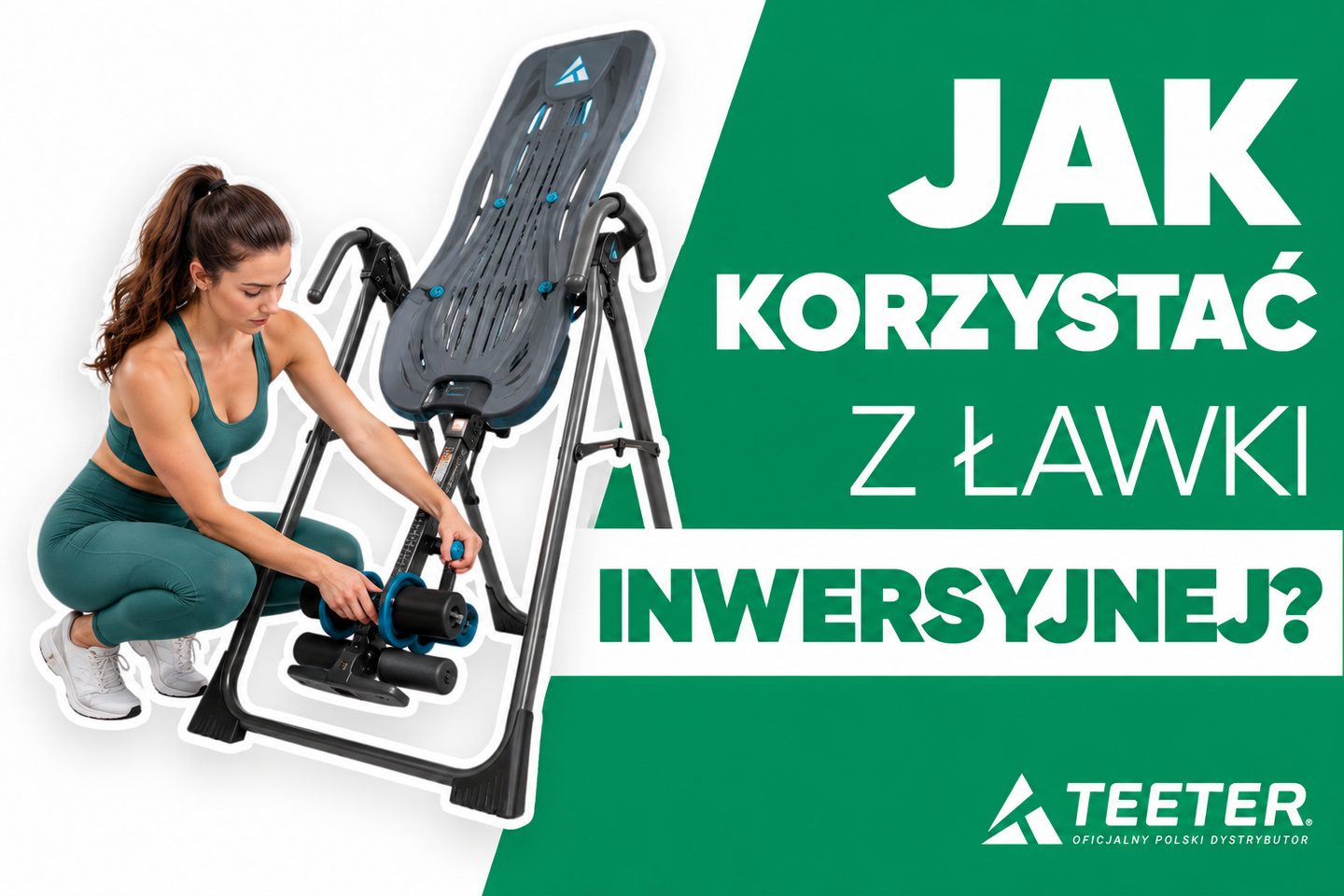
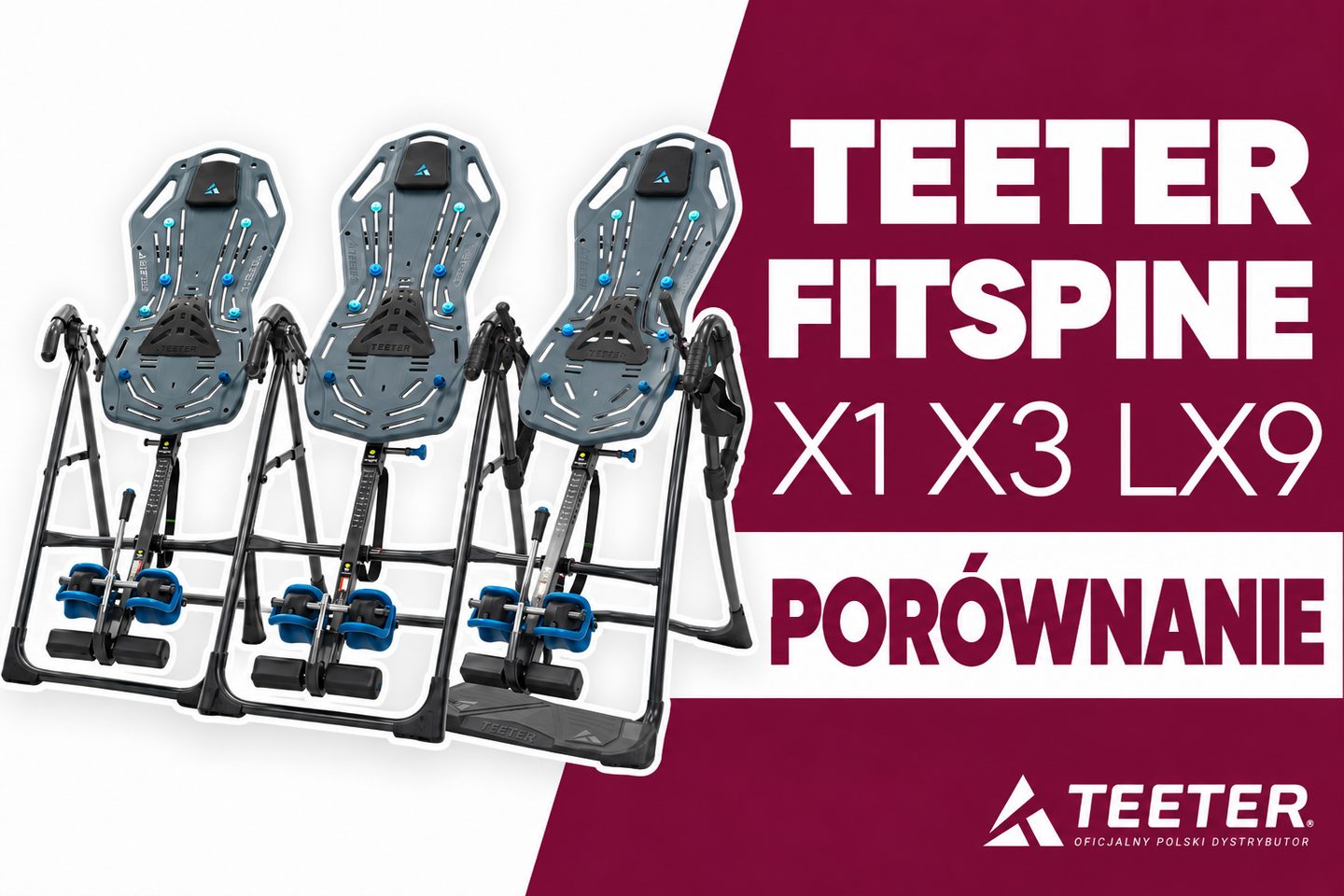
Teeter FitSpine inversion tables are medical devices for home spinal traction with simultaneous stretching of the paraspinal muscles and soft tissues. Consult a doctor before use - inversion has contraindications. The manufacturer's manual lists, among others, high blood pressure and other heart and circulatory conditions, use of anticoagulants, a previous stroke, glaucoma and retinal detachment, osteoporosis, fractures and surgically implanted orthopedic supports, hernias (including hiatal hernia), pregnancy and recent surgery. You will find the full list in the manual and in the article on inversion table contraindications, and the rules for your first sessions in the guide how to use an inversion table.
This is a medical device. Use it in accordance with the instructions for use or the label.
Frequently asked questions
How many vertebrae does the lumbar spine have?
Usually five, labeled L1-L5. Some people have congenital variations, such as an extra or "fused" vertebra at the lumbosacral junction, which is usually discovered by chance on imaging.
Is sitting bad for the lumbar spine?
Sitting itself is not harmful; the problem is often sitting for a long time in one unchanging position. That is why a well set-up workstation and regular breaks in which you get up and move around are more important than searching for the "perfect" position.
How to lift heavy things so your back does not hurt?
Stand close to the object, bend your knees and hips, keep the load close to your body and stand up by straightening your legs. Avoid twisting your torso with a load in your hands, and lift large or awkward items with another person.
Which sleeping position is best for the lower back?
There is no single one for everyone. Many people feel good on their side with a pillow between their knees or on their back with a bolster under their knees. Sleeping on your stomach increases the curve of the lumbar spine, so if you wake up with a stiff back, it is worth trying a different position.
Firm or soft mattress for your back?
Neither extremely firm nor very soft. A mattress should support your body so that your spine keeps its natural alignment. Firmness is chosen mainly based on body weight and sleeping position, and in the end, how you feel after a few nights decides.
Which exercises are good for the lumbar spine?
General activity programs often include the glute bridge, bird-dog, dead bug, cat-cow and hip and glute stretches. Do them without pain, and if you have complaints, first consult a doctor or physical therapist who will select exercises individually.
When should you see a doctor about back pain?
When the pain is severe, does not ease, keeps coming back, wakes you at night or makes everyday life difficult. Urgently if you develop numbness in the groin area, problems passing urine or stool, increasing leg weakness, fever or pain after an injury.
Can everyone use an inversion table?
No. Inversion has contraindications described in the manual, including high blood pressure, glaucoma, osteoporosis, hernias, pregnancy and recent surgery. Consult a doctor before using the table. This is a medical device. Use it in accordance with the instructions for use or the label.
Teeter equipment for home exercise
- Teeter Core Restore - a PVC rubber wedge cushion for sitting with lumbar support, active sitting and balance exercises.
- Teeter FreeStep LT1 - a cross trainer (seated stepper) for working your arms and legs in a seated position.
- Teeter FreeStep LT3 - the same mechanism as the LT1, with a ComfortSelect seat, SoftStep pedals and SureGrip handles.