Hard, tender "knots" between the neck and shoulder, the feeling that your shoulders keep creeping up toward your ears, and a headache at the end of a day at the computer - many people describe this as a tight trapezius muscle. It is one of the largest muscles of the upper back and also one of those that most often "make themselves known" during office work and under stress. In this article, we explain how the trapezius muscle is built and what it does, the typical causes of tension, the symptoms that may come with it, when you need to see a doctor and how to set up your workstation so you do not overload it unnecessarily.
This article is for informational purposes only and does not replace medical advice. If you have symptoms, consult a doctor.
Where is the trapezius muscle and how is it built?
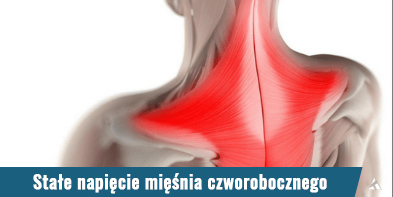
The trapezius muscle (Latin: musculus trapezius) is a flat, broad muscle lying just under the skin in the upper back and the back of the neck. Together, the left and right muscles form a shape resembling a rhombus or trapezoid - hence its name in many languages. It originates at the occipital bone and the spinous processes of the cervical and thoracic vertebrae, and inserts on the collarbone, the acromion and the spine of the shoulder blade.
Anatomically, it is divided into three parts that work slightly differently:
| Part | Location | Main function |
|---|---|---|
| Upper (descending) | From the back of the skull and neck to the collarbone and shoulder | Elevating the shoulders and shoulder blades, assisting in head and neck movements |
| Middle (transverse) | From the upper thoracic vertebrae to the spine of the shoulder blade | Pulling the shoulder blades toward the spine (retracting the shoulder blades) |
| Lower (ascending) | From the lower thoracic vertebrae to the shoulder blade | Depressing the shoulder blades, assisting when raising the arm overhead |
The trapezius stabilizes the shoulder blade, giving the arm a stable base to work from. It is involved in raising the arms, carrying groceries, working with your hands in front of you and holding the position of your head. It is supplied mainly by the accessory nerve (one of the cranial nerves) and partly by the cervical nerves.
Why is it the upper part that tenses up most often?
The upper part of the trapezius works practically all day: it supports the shoulders and helps hold up the head. When we lean our head toward a screen, raise our shoulders at a keyboard that is set too high or carry a heavy bag on one shoulder, this part of the muscle simply has more work to do. On top of that, many people reflexively hunch their shoulders under stress - often without even noticing.
What causes trapezius muscle tension?
Most often there is no single cause, but several overlapping factors:
- Long hours at a desk - a monitor that is too low or off to the side, a laptop on your lap, no support for the forearms, several hours in one position.
- Phones and tablets - long scrolling with your head tilted far forward.
- Stress and emotional tension - hunching the shoulders, clenching the teeth, shallow breathing "into the upper chest".
- One-sided load - a bag or backpack carried on one shoulder, holding the phone between your ear and shoulder, a child always carried on the same hip.
- An uncomfortable sleeping position - a pillow that is too high or too low, sleeping on your stomach with your head turned to the side.
- Training overload - a sudden increase in weights in shoulder and back exercises, technique that involves shrugging the shoulders.
- Injury - e.g. a jolt of the head in a traffic accident (so-called "whiplash" injury).
- Cold and drafts - many people notice a stiff neck after sitting under air conditioning; the mechanism is not entirely clear, but it is worth keeping in mind.
Sometimes trapezius tension accompanies other problems, such as changes in the cervical spine or shoulder or temporomandibular joint complaints. Determining what is the cause and what is the effect is a job for a doctor or physical therapist.
What symptoms does a tight trapezius muscle cause?
Symptoms vary, but many people describe a similar set:
- a dull, diffuse ache in the area between the neck and shoulder, sometimes between the shoulder blades,
- palpable knots in the muscle that are tender to pressure (often called trigger points),
- neck stiffness and limited head movement, especially when turning and tilting to the side,
- a headache starting at the back of the head and radiating toward the temples or behind the eye - typical of tension-type headache,
- a feeling of "heavy" shoulders and fatigue at the end of the day,
- symptoms that get worse after long sitting, under stress or after a sleepless night.
Symptoms that point to a different cause
Muscle tension usually does not cause clear neurological symptoms. If the pain radiates down the arm all the way to the fingers, or comes with numbness, tingling or weakness in the arm, the problem may involve the nerves exiting the cervical spine. "Shoulder" pain that gets worse when you raise your arm may, in turn, come from the shoulder joint. Such symptoms require a medical evaluation.
When should you see a doctor about neck and shoulder pain?
Most episodes of muscle tension are not dangerous. There are, however, situations in which you should not wait.
Go to the ER or call 112 immediately
- neck, shoulder or between-the-shoulder-blades pain with chest pain, shortness of breath, sweating, nausea or pain radiating to the left arm or jaw - these may be symptoms of a heart attack,
- a sudden, very severe headache ("the worst of your life") with a stiff neck, vomiting or impaired consciousness,
- neck pain with a high fever and neck stiffness that makes it impossible to touch your chin to your chest,
- problems with speech, vision or balance, a drooping corner of the mouth or weakness on one side of the body,
- neck pain after an accident, a fall or a blow to the head.
See a doctor soon
- numbness, tingling or weakness in the arm,
- pain lasting longer than a few weeks or clearly getting worse,
- pain that wakes you up at night and does not depend on your position,
- pain with fever, unexplained weight loss or a history of cancer,
- frequent headaches that have changed in character or do not respond to your usual approach.
How to prepare for a doctor's visit
Neck and shoulder complaints are often diffuse and changeable, so it is easy to forget something important in the exam room. Before your visit, it helps to write down:
- where exactly it hurts - the neck, the shoulder, the shoulder blade area, and whether the pain radiates to the arm or head,
- since when you have had symptoms and whether anything came before them (a new job, a move, training, an injury, a stressful period),
- what makes the pain worse and what eases it - position, time of day, movement, rest,
- whether you have headaches, dizziness, numbness or weakness in the arm,
- what your workstation looks like and how many hours a day you spend in front of a screen,
- what medications you take and what chronic conditions you have.
A note like this helps the doctor tell typical muscle tension apart from symptoms that need further diagnostics more quickly.
How does a doctor assess trapezius muscle tension?
The diagnosis relies mainly on the medical history and examination. The doctor asks about the nature of your work, your habits, stress, sleep and the circumstances in which the pain appeared. During the exam, they assess your posture, neck and shoulder mobility, muscle tenderness to pressure, as well as sensation, strength and reflexes in the arms to rule out nerve compression.
Imaging tests (X-ray, MRI of the cervical spine, shoulder ultrasound) are usually ordered when there are neurological symptoms, there was an injury, the pain does not go away despite treatment or another cause is suspected. With headaches, the doctor may also order additional tests or a neurology consultation. The approach - from recommendations on activity and ergonomics, through physical therapy, to medication - is always chosen by a doctor or physical therapist for the specific person.
How to set up your workstation to put less strain on your neck and shoulders
Ergonomics is not a form of treatment, but a well-arranged desk reduces the number of situations in which the upper part of the trapezius works unnecessarily. Check your workstation against the table.
| Element | How to set it up | Why |
|---|---|---|
| Monitor | Straight ahead, top edge roughly at eye level, at arm's length | Less leaning and turning of the head |
| Laptop | On a stand, with a separate keyboard and mouse | Screen higher, hands lower - no compromise |
| Keyboard and mouse | At elbow height, close to the edge of the desk | Shoulders can stay lowered and relaxed |
| Armrests | At desk height or slightly lower, supporting the forearms | The weight of your arms does not "hang" on your shoulders |
| Chair | Feet flat on the floor, back supported | A stable base for the whole torso |
| Phone | Headphones or speakerphone for longer calls | No holding the phone with your shoulder |
| Breaks | A short movement break every 30-60 minutes | Changing position matters more than the "perfect" position |
Everyday habits
- Check your shoulders several times a day - if they are raised, consciously lower them and take a calm breath.
- Switch the shoulder you carry your bag on, or choose a backpack worn on both shoulders.
- Choose a pillow so that when you lie on your side your head is roughly in line with your spine.
- Move during the day - walks, stairs, general exercise. Regular activity matters for your whole body, not just your neck.
- Take breaks from stress - a short pause, stepping outside, breathing or relaxation techniques.
We describe gentle neck stretches that you can do as general activity in our article on tight neck muscles. Do every exercise slowly and without pain, and if you have symptoms, consult a doctor or physical therapist first. If your neck stiffens along with dizziness, also read our article on dizziness and the cervical spine.
Self-massage - in moderation
Many people reach for a massage ball or a self-massage stick to work on the shoulder area. If you do, press gently and avoid the front and sides of the neck (blood vessels and nerves run there) as well as areas with bruises, swelling or skin inflammation. Self-massage does not replace diagnostics - if the pain does not go away or the symptoms described above appear, see a doctor.
Frequently asked questions
Where exactly is the trapezius muscle?
On the back of the neck and in the upper back. It originates at the occipital bone and the cervical and thoracic vertebrae, and attaches to the collarbone, shoulder and shoulder blade. It has an upper, middle and lower part.
Why is my trapezius muscle constantly tight?
Most often because of long hours at the computer, leaning your head over your phone, stress, carrying a bag on one side or an uncomfortable sleeping position. Usually several factors overlap at the same time.
Can a tight trapezius muscle cause headaches?
Tension in the neck and shoulder muscles often accompanies tension-type headache. However, headaches have many causes, so frequent or changing headaches are worth discussing with a doctor.
When is neck and shoulder pain dangerous?
When it comes with chest pain, shortness of breath, a sudden severe headache, fever with a stiff neck, speech or vision problems, or when it appears after an injury. In these cases you need urgent help - the ER or 112.
Which doctor should I see for a tight neck?
The first step is usually your primary care doctor. If needed, they will refer you to an orthopedist, a neurologist or to physical therapy.
Is arm numbness a symptom of trapezius muscle tension?
Numbness, tingling or weakness in the arm may indicate a nerve problem, e.g. in the cervical spine. Such a symptom requires a medical evaluation and should not be put down to muscle tension alone.
How should I position my monitor to avoid straining my neck?
Straight ahead, with the top edge roughly at eye level, at arm's length. With a laptop, it is worth using a stand along with a separate keyboard and mouse.
Teeter accessories for self-massage and movement
The products below are not a form of treatment. They are self-massage accessories and exercise equipment that are worth using after consulting a doctor or physical therapist if you have symptoms.
- Teeter Neck Relax & Restore Duo - a Teeter accessory for self-massage of the neck area.
- Massage ball and self-massage stick - Teeter accessories for self-massage at home.
- Teeter FreeStep LT1 - a seated cross trainer for staying active during the day.