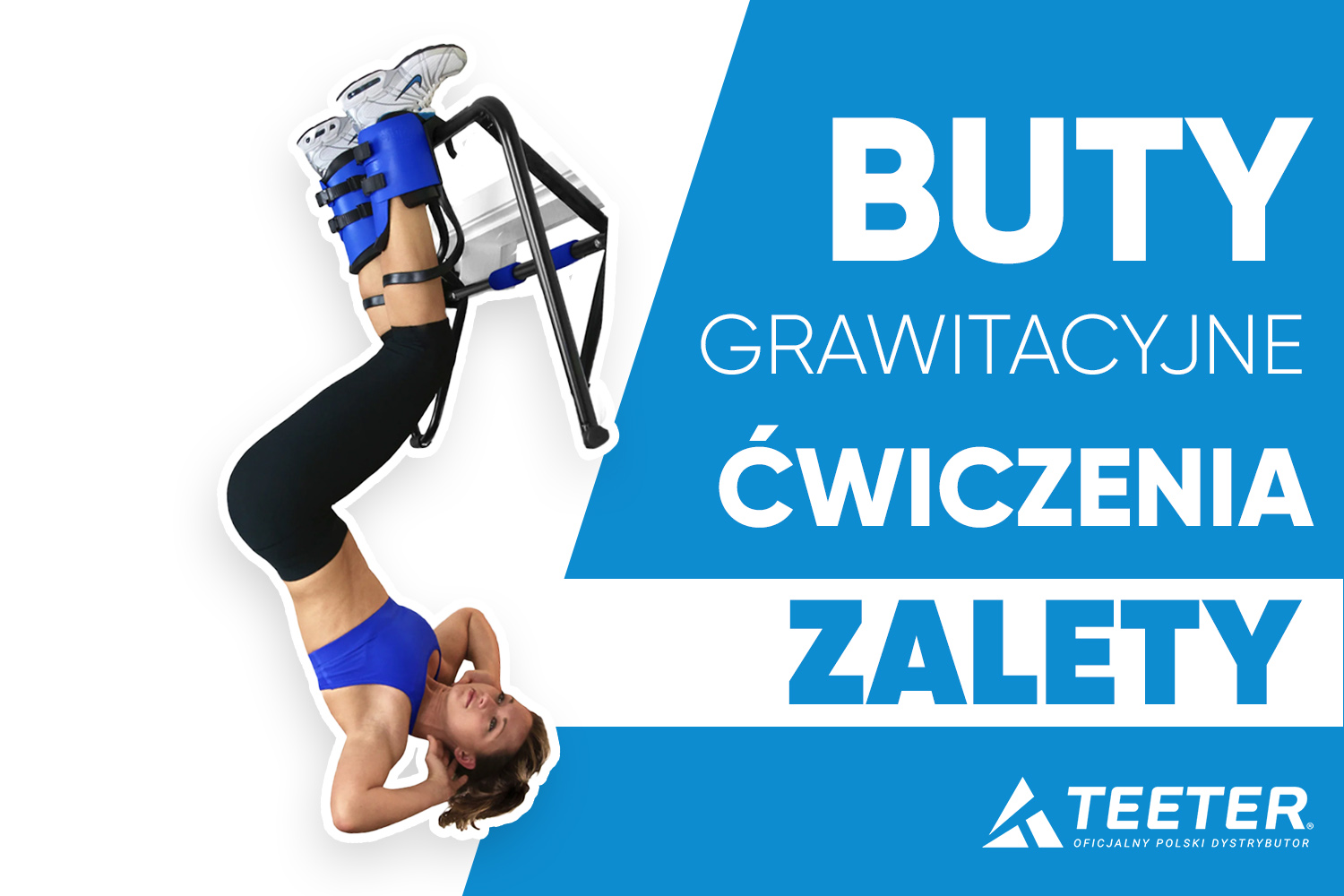
Are you considering inversion and an inversion table, but online you mostly find lists of "miracle benefits" that are hard to get anything concrete from? We took a different approach. We have gathered 10 things that are really worth knowing about inversion and the Teeter table before you buy one, or before you lie on it head down for the first time: what a gravity table is and how it works without a motor, what its status is, who it is not for, how the angle is controlled, where to start, how to adjust the table to your body, how to secure your ankles and return to upright, how much space it takes and who the manufacturer is. Everything is based on the Teeter manual and the questions customers most often ask our customer service team.
What is inversion on a table, and what does a session look like in brief?
Inversion is a position in which your head is lower than your feet. On an inversion table you move into it gradually: you stand with your back to the bed, secure your ankles in the lock, lie back and slowly rotate to the angle you choose - from a slight tilt to full inversion (90°). After a few minutes you use your arms to return to horizontal, rest for a moment and get off the table. Below we break this process down into ten concrete facts.
| No. | What is worth knowing | In one sentence |
|---|---|---|
| 1 | The table is non-powered | You control rotation with arm movements and your body weight. |
| 2 | The Teeter table is a medical device | It is CE-marked and has a defined intended purpose. |
| 3 | It is not for everyone | It requires a doctor's approval and has contraindications. |
| 4 | The angle can be limited | A strap under the bed stops you from rotating further than you set. |
| 5 | You start at small angles | 20-30° and 1-2 minutes to begin with. |
| 6 | The table is adjusted to you | Four user settings. |
| 7 | Ankles and footwear are key | Flat, laced shoes and the "hear, feel, see, check" method. |
| 8 | Returning upright has its own technique | Arms along your body, knees bent, no sitting up. |
| 9 | The table folds | Without tools, assembly with the BILT app. |
| 10 | Teeter since 1981 | UL certification, Polish-language manual, 5-year warranty. |
1. Why is an inversion table also called a gravity table?
Inversion table, gravity table and inversion bench are three names for the same device. The name "gravity" comes from the fact that the table has no motor or drive of any kind. You control the movement with your body weight alone: when you raise your arms above your head, your center of gravity shifts and the table starts to rotate toward inversion. When you lower your arms along your torso, the table returns toward upright.
For this to work smoothly, the table must be balanced for the specific user. The Teeter manual points out that the faster you move, the faster the table rotates - which is why every movement should be slow and calm. It is a simple rule, but in practice it determines whether a session is comfortable and predictable.
2. Is a Teeter inversion table a medical device?
Yes. The Teeter FitSpine X1, X3, LX9 and EP-560 tables are CE-marked medical devices. In its documentation the manufacturer calls them decompression devices and defines their intended purpose as home spinal traction with simultaneous stretching of the paraspinal muscles and soft tissues. The traction is non-powered, and the devices are intended for adults, for indoor home use. In the USA, Teeter tables are registered with the FDA as medical devices - in the European Union, the device's status is determined by CE marking.
This is a medical device. Use it in accordance with the instructions for use or the label.
What does this mean in practice? A medical device has a clearly described intended purpose, warnings and contraindications. Not everything you find online about inversion is backed by the manufacturer's documentation - which is why the manual supplied with the table is always the point of reference. Teeter accessories, such as the EZ-Up XL gravity boots, are not medical devices.
3. Who is an inversion table not intended for?
Inversion is not for everyone. The Teeter manual says: do not use the table until you have your doctor's approval. Inversion is contraindicated in any condition that could be worsened by increased blood pressure, increased intracranial pressure or the strain associated with the inverted position. Among the contraindications, the manual lists:
- heart and circulatory conditions, e.g. high blood pressure, hypertension, use of anticoagulants;
- brain conditions, e.g. a previous stroke or risk of stroke, intracranial bleeding, severe headaches;
- neurological conditions causing unexplained tingling, weakness, dizziness or disorientation;
- bone and spine conditions or injuries, e.g. osteoporosis, fractures, significant curvature of the spine, surgically implanted orthopedic supports;
- eye and ear conditions, e.g. glaucoma, a history of retinal detachment, ocular hypertension, motion sickness;
- hernias (including hiatal hernia), reflux, kidney or gallbladder disease;
- pregnancy, obesity, recent surgery and other conditions in which a doctor has restricted physical activity.
The full list is in the manual. The table is intended for people 142 to 198 cm tall weighing up to 136 kg. It must not be used by children or by people under the influence of alcohol or medications that cause drowsiness. We write more about this in the article inversion table contraindications.
4. How is the inversion angle controlled?
You do not have to hang upside down right away. Every Teeter table has an angle limiter - a strap attached under the bed that stops the table from rotating further than you set. There are two solutions:
- Angle Tether (FitSpine X1, EP-560) - an adjustable strap with a buckle: you slide it to lengthen or shorten the range of rotation.
- EZ-Angle Tether (FitSpine X3, LX9) - a strap with embroidered, color-coded markings for 20° (green), 40° (orange) and 60° (red). You set the angle in one move, without guessing.
With the strap unclipped, all tables allow full inversion (90°) with a lock - if the roller hinges are set correctly, your body weight holds the table in the inverted position until you start to return. The manual cautions, however, not to attempt full inversion until you feel confident controlling the rotation at 60°.
5. What angle and session length should you start with?
This is one of the questions we get most often. The Teeter manual and exercise guide give concrete answers:
- Angle: start at a small angle of 20-30° for the first few weeks, or until you feel comfortable on the table. Introduce larger angles gradually, first up to 60°. Many users never go beyond 60°, and the manufacturer emphasizes that this is fine.
- Time: start with short 1-2 minute sessions. Over time you can gradually lengthen them, usually to about 3-5 minutes.
- Frequency: according to the manufacturer, shorter, more frequent sessions are better than long, infrequent ones.
- Rest: after each session, pause in the horizontal position for 15-30 seconds or longer before returning to upright.
The guide also suggests starting each session at a smaller angle, focusing on calm, deep breathing and not going beyond your comfort level. If a stretch causes pain, you should stop it and remove it from your routine. We describe a detailed plan for the first sessions in the guide how to use an inversion table.
6. Which settings need adjusting before first use?
The Teeter manual lists four user settings that must be checked before each use - especially when several people use the table:
| Setting | What it is for | How to set it (per the manual) |
|---|---|---|
| Main shaft height | balancing the table for your height and build | start at approx. 2.5 cm more than your height, then adjust one hole up or down |
| Roller hinge (3 holes) | speed and responsiveness of rotation | based on body weight; beginners choose the "beginner / partial inversion" setting |
| Angle limiter | maximum angle of rotation | 20-30° to begin with; on the X3 and LX9, markings for 20/40/60° |
| Ankle Comfort Dial | adjusting the foot support | high or low position (a difference of approx. 2.54 cm), so that the cushions wrap around the narrowest part of your ankles |
Checking the balance is simple: lie flat with your arms along your body. If the table starts to rotate slightly, it is set correctly. If it rotates strongly, the main shaft is probably too low, and if it does not rotate at all, it is too high. The manual warns that incorrect settings can cause the table to rotate too quickly or make it difficult to return to the starting position.
7. Why are the ankle lock and footwear so important?
In the inverted position your entire body weight rests on your ankles, which is why the manufacturer devotes the most attention to this. The key rules from the manual:
- Always wear well-laced shoes with flat soles, e.g. sneakers. Do not wear shoes with thick soles that could interfere with the lock.
- Insert your feet from the side, rotating your leg, so that your ankles are between the front and rear cushions and your feet rest on the base.
- When closing the lock, use the "hear, feel, see, check" method: the click, the cushions fitting snugly, no play, a test by moving your feet.
Teeter tables come with two types of lock. T-pin (X1, EP-560) is a spring-loaded lock with a T-shaped handle. Deluxe EZ-Reach (X3, LX9) has an extended handle and a micro-adjust ratchet, so you secure your feet without bending down. In both cases your ankles are held by soft Ergo-Embrace supports.
8. How do you return to upright correctly?
Returning is the moment when beginners make the most mistakes. The manual describes it as follows:
- Slowly lower your arms along your torso - the table will start to return toward upright.
- If that is not enough (your body may have shifted slightly on the bed), bend your knees slightly.
- Do not lift your head, do not try to sit up and do not rely solely on the handles.
- From full inversion, reach one hand behind your head to the bed handle, grab the front of the frame with the other, and bring your hands toward each other, taking care that your elbow does not get caught between the table and the frame.
- Pause in the horizontal position for 15-30 seconds or longer, and only then return to upright.
If you still have trouble returning, the manual recommends correcting the user settings and repeating the balance test. For the first sessions, it is a good idea to have a second person nearby.
9. How much space does the table take up, and can it be folded?
In use, the table is over 2 meters long and approx. 2.2 m high, and its footprint changes as it rotates. The manual reminds you to make sure there is enough room in front of you, above you and behind you before use. All Teeter tables fold without tools.
| Model | Dimensions in use (L x W x H) | Folded dimensions | Table weight |
|---|---|---|---|
| Teeter EP-560 | 213.4 x 73.2 x 218.4 cm | 50.8 x 73.2 x 167.6 cm | 26.7 kg |
| Teeter FitSpine X1 | 205.7 x 73.2 x 219.7 cm | 50.8 x 73.2 x 167.6 cm | 27.4 kg |
| Teeter FitSpine X3 | 205.7 x 73.2 x 219.7 cm | 50.8 x 73.2 x 167.6 cm | 29.9 kg |
| Teeter FitSpine LX9 | 207.4 x 81.2 x 219.6 cm | 56.1 x 81.2 x 171.1 cm | 33.4 kg |
Leave the folded table with its frame legs spread approx. 40-50 cm apart so that it stands stably, or secure it against a wall. If there are children in the home, the manufacturer recommends storing the table folded and laid flat on the floor. The table should stand on a level surface - on laminate or tile floors, a floor mat for the table will come in handy.
The table arrives in a box and requires assembly. The free BILT app helps with this - interactive 3D instructions in which you can rotate and zoom the model and repeat any step. There is also the Teeter Move app with video and audio programs of exercises on and off the table, with no subscription.
10. Who is Teeter, and what do you get in the box?
Teeter is an American manufacturer that has been designing inversion tables since 1981 in Bonney Lake, USA. According to the manufacturer, more than 3 million people around the world use its tables. A few facts worth knowing:
- UL safety certification - the tables have passed tests with a 4x strength margin (approx. 544 kg at a 136 kg user limit).
- Construction - a welded, powder-coated steel frame and heat-treated steel fasteners.
- Included - every table we offer comes with a lumbar bridge, 4 pairs of acupressure nodes, a head pillow, assembly instructions and a full-color user guide. The X3 and LX9 also have Stretch Max handles and EZ-Stretch traction handles, and the LX9 has a Storage Caddy.
- Polish-language manual and warranty - as the official distributor, we have translated the user manual into Polish and provide a 5-year warranty on tables.
The manual prohibits using attachments other than Teeter ones on the table, as well as weights, bands and other exercise equipment. You will find replacement acupressure nodes in the acupressure nodes category, and other add-ons in the accessories section.
Which Teeter model should you start with?
All four tables have the same user range, full inversion with a lock, a roller hinge with 3 settings and tool-free folding. They differ in the bed, ankle lock, handles and frame:
- Teeter EP-560 - ComforTrak bed, T-pin lock, Angle Tether strap. The lightest table in our range.
- Teeter FitSpine X1 - FlexTech bed with 8-point suspension and T-pin lock.
- Teeter FitSpine X3 - the most popular choice: Deluxe EZ-Reach lock, 20/40/60° limiter, Stretch Max and EZ-Stretch handles.
- Teeter FitSpine LX9 - the flagship with the arched LX frame, entry platform and storage caddy.
We discuss the differences in detail in the FitSpine X1, X3 and LX9 comparison and in the guide which inversion table is best. You can see all models side by side in the inversion tables category.
Frequently asked questions
What is the difference between an inversion table and a gravity table?
None - these are two names for the same device. The name "gravity" emphasizes that the table is non-powered and you control rotation with your body weight and arm movements.
What is a Teeter inversion table for, according to the manufacturer?
The Teeter FitSpine X1, X3, LX9 and EP-560 tables are medical devices for home spinal traction with simultaneous stretching of the paraspinal muscles and soft tissues. This is a medical device. Use it in accordance with the instructions for use or the label.
Can everyone use an inversion table?
No. You need your doctor's approval before use, and the manual lists contraindications, including high blood pressure, glaucoma, osteoporosis, hernias, pregnancy and a previous stroke. The table is for adults 142-198 cm tall weighing up to 136 kg.
Do you have to hang completely upside down?
No. The manual recommends starting at 20-30°, and many users never go beyond 60°. Full inversion is an option for people who confidently control the rotation at 60°.
How long does one session on the table last?
1-2 minutes to begin with. Over time, once you feel comfortable, you can gradually lengthen sessions, usually to about 3-5 minutes. After each session, rest for a moment in the horizontal position.
Can you exercise on the table with dumbbells or bands?
No. The manual prohibits aggressive movements and the use of weights, bands and other exercise equipment on the table. Movements and stretches described in the manufacturer's guide, performed slowly, are allowed.
Is an inversion table hard to assemble?
Assembly requires the wrenches included in the kit and a bit of time, and the BILT app with 3D instructions helps. Once assembled, you fold and unfold the table without tools.
What warranty do Teeter tables have?
In our store, Teeter inversion tables come with a 5-year warranty. As the official distributor, we also provide a Polish-language user manual and help with choosing a model.
Recommended products
- Teeter FitSpine X3 - our most popular model, with a 20/40/60° angle limiter and the Deluxe EZ-Reach lock.
- Teeter FitSpine LX9 - the flagship table with the arched LX frame, entry platform and storage caddy.
- Teeter FitSpine X1 - FlexTech bed with 8-point suspension and a simple T-pin lock.
- Teeter EP-560 - a classic table with the ComforTrak bed.