This article is for informational purposes only and does not replace medical advice. If you have any complaints, consult a doctor.
Want to exercise at home because you do not have time for the gym, because your physical therapist gave you a list of exercises to continue after your sessions, or simply because you prefer to move within your own four walls? The choice of equipment can be overwhelming: trainers, bikes, mats, bands, balls, benches, rollers. Some of them will serve you for years, some will end up as a clothes hanger. In this overview we describe the types of home exercise equipment, what each of them is for, what to look for when buying and how to match your choice to yourself and your home. An important disclaimer: if you are in rehabilitation after an injury, surgery or illness, a doctor or physical therapist decides which exercises and which equipment are right for you. No equipment on its own ensures recovery.
Where to start when choosing home exercise equipment?
Before you start comparing models, answer a few questions:
- What is the goal? General fitness, muscle strengthening, stretching, continuing exercises recommended by a physical therapist, relaxing after work?
- Who will be exercising? One person or several household members of different heights, weights and fitness levels?
- How much space do you have? Will the equipment stay in place permanently, or will you need to put it away after every workout?
- What are your limitations? Medical conditions, past injuries, difficulty getting down onto the floor and back up, balance problems?
- What did your specialist recommend? If you are under the care of a physical therapist, ask them directly which equipment will be useful and which to avoid.
The answers will quickly narrow down your options. It often turns out that a mat and a set of bands are enough to start with, and larger equipment is worth buying only once exercise has become a habit.
What types of home exercise equipment are there?
| Type of equipment | What it is for | Space | What to watch out for |
|---|---|---|---|
| Exercise mat | A surface for floor exercises and stretching | Minimal, easy to store | Thickness, non-slip surface |
| Resistance bands (flat bands, tubes, mini bands) | Strengthening exercises with adjustable resistance | Minimal | Correct resistance, band wear |
| Dumbbells, weights | Strength exercises | Small | Choice of weight, technique |
| Exercise ball | Balance and stability exercises, sitting | Medium | Size matched to height, risk of falling |
| Self-massage accessories | Self-massage and relaxation | Minimal | Pressure, contraindications |
| Cardio trainers (bike, elliptical, cross trainer, treadmill) | Endurance exercise | Large, permanent spot | Stability, adjustments, noise |
| Multi-purpose benches | Strength exercises, abdominal and back muscles | Medium to large | Weight capacity, adjustments |
| Inversion tables | Spinal traction by inversion (medical device) | Large, can be folded | Contraindications, consultation with a doctor |
Which exercise mat for home?
A mat is the simplest and most versatile piece of equipment. When choosing, pay attention to:
- thickness - thin mats (a few millimeters) provide a stable surface for standing exercises and yoga; thicker ones (approx. 1-1.5 cm) are more comfortable for lying and kneeling exercises, but less stable for balance exercises;
- non-slip properties - both on the bottom (so that the mat does not slide across the floor) and on the top;
- dimensions - the mat should be slightly longer than your height if you exercise lying down;
- material and cleaning - easy cleaning matters with regular use; people with a latex allergy should check the material.
A separate category is equipment mats, which protect the floor from scratches and keep the equipment from shifting. One example is the Teeter Better Back mat, measuring approx. 91 x 152 cm, made of latex-free material, with 24 illustrated exercises printed on it - designed for Teeter tables, but it can also serve as a regular exercise mat. You will find it in the equipment mat category.
Resistance bands - which ones to choose?
Bands are one of the most practical types of home equipment: light, inexpensive, they take up little space, and you change the resistance by choosing a band of a different strength or shortening it. Physical therapists often use them in exercises recommended for home.
- flat bands - long, thin strips, convenient for upper and lower limb exercises;
- tubes with handles - rubber tubes with handles, useful for exercises similar to those on cable machines;
- mini bands - short loops, usually placed around the thighs or ankles;
- power bands - thick, long loops with high resistance.
What to look for: a set of several bands with different resistance levels (usually color-coded), the quality of the rubber and seams, no cracks. Before each use, check that the band is not torn and anchor it to a stable point - a snapped band can hit you. If a physical therapist recommended band exercises, ask them to specify the resistance.
Trainer, bike or treadmill - which cardio equipment for home?
Cardio equipment takes up the most space and is the biggest expense, so it is worth choosing it carefully.
Stationary bike
A classic choice for the home. Upright bikes take up little space, recumbent bikes (with a backrest) provide a more comfortable seated position. They mainly work the legs.
Elliptical (elliptical trainer)
Standing exercise, an elliptical movement without your feet striking the ground, usually with moving handles for the arms. It requires keeping your balance while standing and takes up quite a lot of space.
Seated cross trainer (recumbent elliptical)
Combines features of a recumbent bike and an elliptical: you sit with a backrest behind you, and your legs and arms work at the same time. One example is the Teeter FreeStep - a trainer with a stepping motion, 13 levels of quiet magnetic resistance, an adjustable seat (height and 3 backrest recline positions) and a battery-powered console, so it does not need an outlet. According to the manufacturer, it is designed for users 150-198 cm tall weighing up to 136 kg. The FreeStep LT1 is the basic version, while the FreeStep LT3 features, among other things, a ComfortSelect seat with depth adjustment and UltraGlide bearings. FreeStep is exercise equipment, not a medical device.
Treadmill
Lets you walk and run at home regardless of the weather. It takes up a lot of space, requires power and - at faster speeds - good coordination. For people with balance problems, handrails and a safety cord are essential.
| Equipment | Position | Arm work | Requires balance | Power |
|---|---|---|---|---|
| Upright bike | Seated, no backrest | No | A little | Depends on the model |
| Recumbent bike | Seated, with backrest | No | A little | Depends on the model |
| Elliptical | Standing | Yes | Yes | Depends on the model |
| Seated cross trainer (e.g. FreeStep) | Seated, with backrest | Yes | A little | FreeStep: battery-powered console |
| Treadmill | Standing, walking or running | No | Yes | Yes |
Self-massage accessories - are they worth having?
Self-massage balls, rollers, sticks and supports are small accessories that many people reach for after a workout or in the evening to relax. They are not therapeutic equipment and do not replace therapy. They are used without pain, avoiding the spine and areas with a fresh injury. We describe the differences between types in the guide which foam roller to choose, and the technique step by step in the article on back self-massage.
In the recovery and massage section you will find Teeter accessories, including the Neck Restore and Neck Relax & Restore Duo neck supports and the Core Restore cushion, which serves as lumbar support when sitting and as a cushion for balance exercises. These are accessories, not medical devices.
Exercise benches and inversion tables - how do they differ?
Multi-purpose benches
They are used for strength exercises - with dumbbells, and for working the abdominal and back muscles. When choosing, look at weight capacity, stability, adjustment range and whether it can be folded. One example is the Teeter DEX II - a bench for exercising the abdominal, back and upper body muscles, with adjustable leg supports, for users 142-198 cm tall weighing up to 136 kg. The DEX II also allows head-down exercises, so people with heart conditions, high blood pressure, glaucoma or other conditions should consult a doctor before using it.
Inversion tables
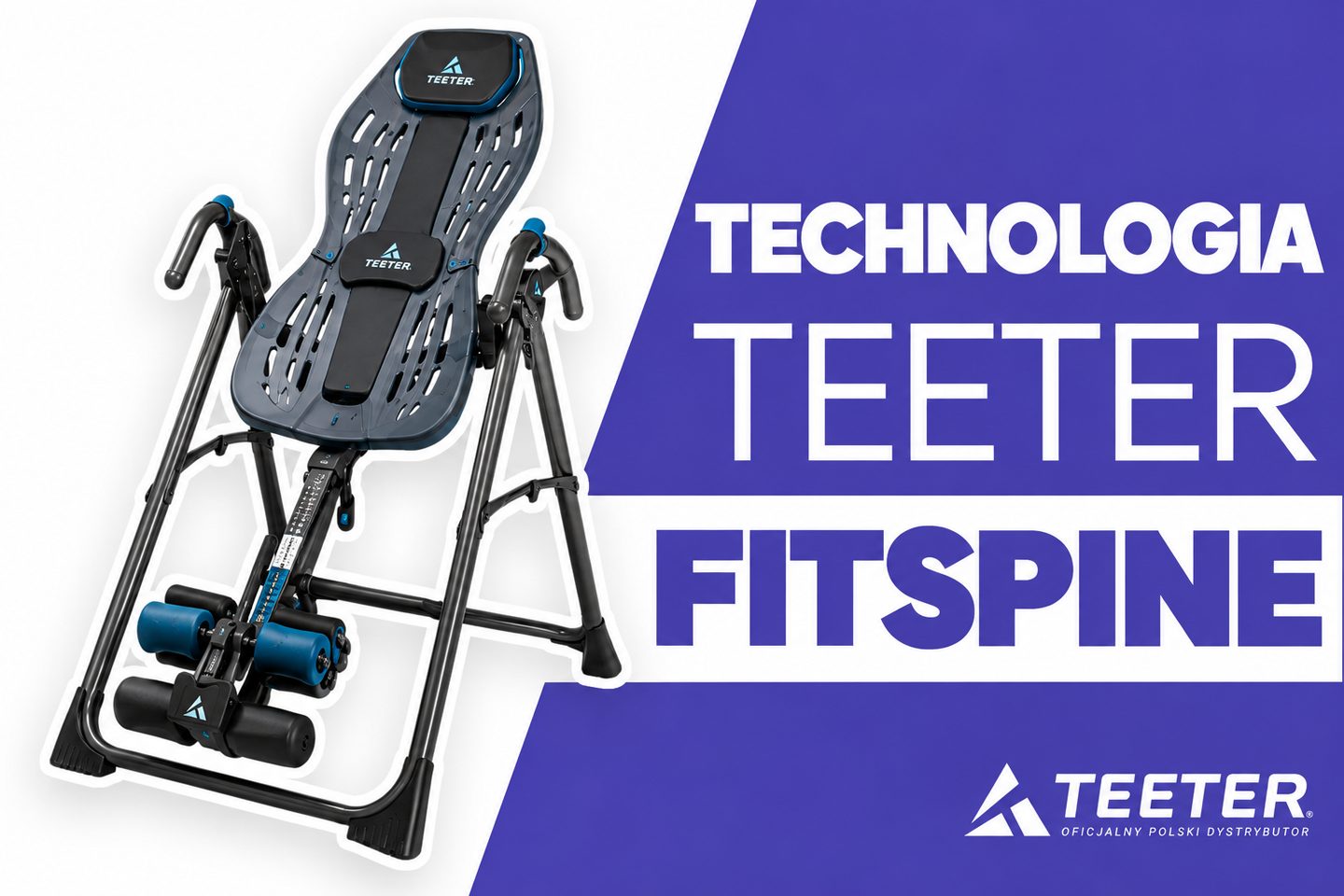
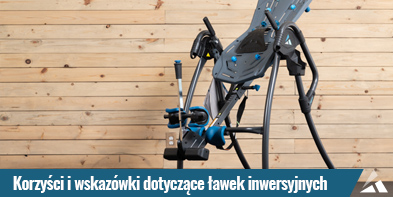
This is a different category of equipment. Teeter FitSpine inversion tables are medical devices for home spinal traction with simultaneous stretching of the paraspinal muscles and soft tissues. Consult a doctor before use - inversion has contraindications, including high blood pressure and other heart and circulatory conditions, a previous stroke, glaucoma and retinal detachment, inner ear disorders and balance disorders, osteoporosis, spinal fractures and injuries, hernias, pregnancy, recent surgery and use of anticoagulants (full list in the manual). This is a medical device. Use it in accordance with the instructions for use or the label.
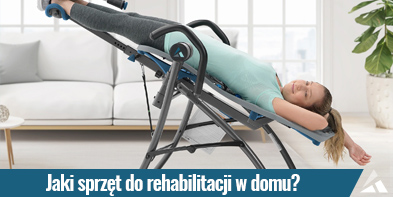
An inversion table is not universal "rehabilitation" equipment and does not replace therapy. A doctor decides whether you can use it. You will find a full discussion of contraindications in the article who an inversion table is for and what the contraindications are, and the differences between models in the inversion table buying guide.
What to look for when buying exercise equipment?
| Specification | Why it matters | How to check |
|---|---|---|
| Maximum user weight | Safety and durability of the frame | Manufacturer's specifications, with a margin |
| Height range | A comfortable and correct position | Specifications, adjustment range |
| Stability | Risk of tipping over or shifting | Base width, equipment weight, feet |
| Adjustments | Fitting several users and your progress | Seat, handles, resistance |
| Dimensions and clearance | Whether it will fit safely | Assembled dimensions + clearance required in the manual |
| Getting on and off | Especially important for seniors | Seat height, handles, steps |
| Noise | Evening workouts, apartment living | Type of resistance (magnetic is quiet) |
| Manual and service | Correct assembly and use | Distributor in Poland, warranty |
New, used or rented?
Used equipment can be cheaper, but it is hard to assess its condition, the wear of its parts and whether it comes with a manual and warranty. Renting makes sense when equipment is needed only for a short time - for example, specialized equipment recommended for a recovery period, often available from medical equipment rental services. New equipment from a well-known manufacturer gives you a warranty, a complete manual and certainty about its technical condition.
How to exercise safely at home?
- read the manual and assemble the equipment exactly as described;
- place the equipment on a level, stable surface with free space around it;
- start with low resistance and short sessions, and increase gradually;
- do a short warm-up before every workout;
- regularly check the condition of the equipment - bolts, bands, cables;
- make sure children and pets do not play with the equipment;
- stop exercising if you experience pain, dizziness, shortness of breath or chest pain;
- if you have chronic conditions or have had an injury, set up your exercise plan with a doctor or physical therapist.
We write about how to keep older people safe and active at home in the article activity for seniors at home.
Frequently asked questions
What home exercise equipment should you start with?
For most people a mat and a set of resistance bands with different resistance levels are enough. They allow you to do many strengthening and stretching exercises. Larger equipment, such as a cardio trainer, is worth buying once exercise has become a habit and you know what you need.
Can exercise equipment replace rehabilitation?
No. Rehabilitation after an injury, surgery or illness is planned and supervised by a specialist. Home equipment can be useful for doing the exercises your physical therapist recommended, but it does not replace diagnosis or therapy.
Which trainer for an older person?
Many older people choose equipment for seated exercise with a backrest, such as a recumbent bike or a seated cross trainer, because it does not require keeping your balance while standing. Easy access, an adjustable seat and very light resistance to start with are also important. It is worth making the decision together with a doctor.
How much space does cardio equipment need?
In addition to the dimensions of the machine itself, you need to account for the clearance around it specified in the manual. For example, the FreeStep trainer manual recommends at least 61 cm of free space on each side.
Is an inversion table rehabilitation equipment?
Teeter FitSpine tables are medical devices for home spinal traction with simultaneous stretching of the paraspinal muscles and soft tissues. They have contraindications, and you must consult a doctor before use. They do not replace rehabilitation supervised by a specialist.
What mat thickness should you choose?
For standing exercises and yoga, a thinner, stable mat is better. For lying and kneeling exercises, a thicker one is more comfortable. Always pay attention to a non-slip bottom.
Are resistance bands safe?
When used correctly, yes, but before each exercise check that the band is not cracked and anchor it to a stable point. Do not stretch the band further than the manufacturer specifies. If the exercises are part of a recommended program, it is best to choose the resistance together with a physical therapist.
Is the Teeter FreeStep a medical device?
No. FreeStep is a cross trainer for seated exercise. The medical devices in the Teeter range are the FitSpine and EP-560 inversion tables.
Recommended products
- Teeter FreeStep LT1 - a cross trainer for seated exercise, 13 levels of quiet magnetic resistance.
- Teeter Better Back Mat - a non-slip mat with printed exercises, for use under a table or for floor exercises.
- Teeter Core Restore - a cushion for lumbar support when sitting and for balance exercises.
- Teeter DEX II - a bench for exercising the abdominal, back and upper body muscles.