When you browse inversion table listings, you will run into a whole string of abbreviations and marks: UL, CE, FDA, sometimes others. Some of them say a great deal about the safety of the equipment, others say less than the advertising suggests. In this article we explain what UL certification is, what exactly the UL 1647 standard for inversion tables tests, what the result means in practice (e.g. a strength test with a safety margin of approx. 544 kg at a 136 kg user limit), how it differs from CE marking and FDA registration, and how to read the markings when you buy, so you do not get caught out by marketing shorthand. Everything is based on Teeter documentation and information published by the manufacturer.
What is UL?
UL (Underwriters Laboratories) is an independent American organization that has been developing safety standards and checking whether products meet them since the late 19th century. You will find the UL mark on many devices, from electrical equipment to home furnishings. It means that representative samples of the product have been tested by UL against the standard for the given category and met its requirements, and that the manufacturer remains under ongoing surveillance.
An important distinction: UL is not a government agency but an independent certification organization. In many countries inversion tables have no mandatory manufacturing standard, which is why a voluntary third-party certification is one of the few ways to check whether the design has been properly tested, rather than just described as "sturdy".
What is the UL 1647 standard for inversion tables?
UL 1647 is a safety standard for massage and exercise equipment. In 2011 UL updated it with requirements written specifically for inversion tables, that is, devices on which the user hangs upside down, held only by the ankles. According to the manufacturer, Teeter was the first manufacturer whose tables were listed under the updated standard.
The key requirements listed by the manufacturer:
| UL 1647 requirement | What it involves | What it checks in practice |
|---|---|---|
| Cycle test | 30,000 simulated cycles at the maximum user weight, rotating from upright to full inversion | whether the frame, hinges, footrest and ankle lock will withstand years of regular use |
| Strength test | a load with a 4x safety margin over the maximum user weight, in the horizontal and vertical positions | whether the structure has a large safety margin above the permitted weight |
| Ankle lock test | 30,000 cycles of the ankle lock | whether the part that holds you in the inverted position will not wear out prematurely |
| "End-stop" test | repeatedly rotating the loaded table all the way to its stop | whether the frame can handle an abrupt stop of the rotation |
| Stability test | checks at various loads and angles | whether the table tips over during rotation |
| Return to upright | a required means of returning from inversion | whether the user can safely return to the starting position |
| Labels and warnings | uniform labeling rules | whether limits and warnings are visible on the device |
| Factory inspections | unannounced quarterly UL inspections | whether subsequent production batches still meet the standard |
What does a 4x strength margin mean, and where does 544 kg come from?
All the Teeter tables we offer - FitSpine X1, FitSpine X3, FitSpine LX9 and EP-560 - have the same user limit: up to 136 kg and a height of 142-198 cm. The standard requires a 4x strength margin, so in testing the table must withstand a load of approx. 544 kg (4 x 136 kg).
Why such a large margin when nobody weighs 544 kg? Because the load on the table is not just body weight at rest. Rotating, stopping at the limiter and gentle movements in full inversion all add dynamic forces. On top of that comes material wear over the years. A large margin means that normal use in line with the manual is very far from the structural limit of the design.
Note: the strength margin does not change the user limit. The manual is clear: do not use the table if you are taller than 198 cm or weigh more than 136 kg, otherwise the structure may be damaged or your head may hit the floor during inversion. The height limit therefore follows not only from strength but also from the geometry of the table.
How does UL differ from CE marking and FDA registration?
On Teeter tables and in their documentation you will find three different markings. Each one says something different:
| Marking | Who grants it / what it covers | What it means for a Teeter table |
|---|---|---|
| UL (listing under UL 1647) | independent organization Underwriters Laboratories, safety and strength tests | representative samples evaluated by UL, meet applicable safety standards |
| CE (medical device) | marking of conformity with EU regulations; EU representative: Medical Device Safety Service GmbH, Hannover | in the EU the table is a medical device with a defined intended purpose and instructions for use |
| FDA registration | US Food and Drug Administration | in the USA the tables are registered as Class I medical devices |
CE - medical device status in the EU
The Teeter FitSpine X1, X3, LX9 and EP-560 tables are CE-marked medical devices. The manufacturer defines their intended purpose as home spinal traction with simultaneous stretching of the paraspinal muscles and soft tissues, non-powered, for adults. It is the CE marking that determines the device's status in Poland and the EU. This is a medical device. Use it in accordance with the instructions for use or the label.
FDA - registration, not an assessment of effectiveness
In materials about inversion tables, the FDA is sometimes presented as an agency that has assessed the effectiveness of the equipment. That is inaccurate. In the USA, Teeter tables are registered with the FDA as Class I medical devices. Registration is a formal fact in the American system: it is not an assessment of effectiveness and does not replace CE marking in the European Union. That is why we mention it as a fact, not as a sales argument.
UL - construction and mechanical safety
CE and FDA concern the legal status of the device. UL tells you something more tangible: whether the frame, hinges and ankle lock have passed independent strength tests. For someone buying a table, this is often the most practical information.
How can you check whether a table really is UL certified?
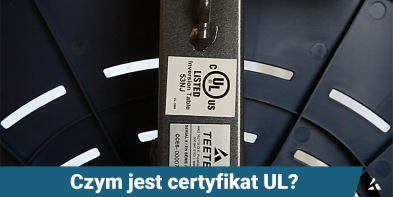
The simplest rule: the UL mark should be on the product itself, not just in the store description or in an ad. The Teeter table manual states that the product is listed by Underwriters Laboratories and that representative samples have been evaluated by UL and meet applicable safety standards.
When buying any inversion table, check:
- The UL mark on the device label - not only in the description. A phrase like "tested to standards" without a mark on the product says very little.
- The standard number - for inversion tables the relevant one is UL 1647.
- User limits on the label - on Teeter tables: 142-198 cm and 136 kg, for indoor home use only.
- Warning labels - at the main shaft setting, the ankle lock and the return from full inversion.
- CE marking and EU representative details - if the seller describes the table as a medical device.
- A manual in a language you understand - with contraindications, user settings and rules of use.
What can void UL certification?
The Teeter manual says it directly: any modification of the device voids the UL certification. The certification applies to the table in the form in which it was tested. In practice this means:
- do not drill, weld or alter the frame,
- do not fit attachments other than Teeter ones - the manual prohibits this,
- do not use weights, bands or other exercise equipment on the table,
- replace damaged or worn parts immediately with original ones and do not use the table until it is repaired,
- before each use, check that all fasteners are secured.
Original spare parts, such as acupressure nodes, and other add-ons can be found in the accessories section.
Does certification mean the table is safe for everyone?
No. UL certification covers the construction: strength, stability and how the mechanisms work. It says nothing about whether inversion is appropriate for a particular person. The Teeter manual requires you to get your doctor's approval before use and lists contraindications, including high blood pressure, heart and circulatory conditions, a previous stroke, glaucoma and other eye conditions, osteoporosis, fractures, hernias, pregnancy and recent surgery. We discuss them in detail in the article inversion table contraindications.
Correct use is just as important: adjusting the four user settings, proper footwear, securing the ankles with the "hear, feel, see, check" method and starting at small angles. We describe this step by step in the guide how to use an inversion table.
What else should you check when buying, besides certifications?
Certification is only the beginning. You buy a table for years, so it is worth checking what will determine comfort and safety in everyday use as well:
| What to look at | Why it matters | How Teeter tables handle it |
|---|---|---|
| Manual in your language | settings and warnings must be fully understandable | Polish-language manual prepared by the official distributor |
| User adjustment | a poorly balanced table rotates too fast or makes returning difficult | 4 settings: main shaft, roller hinge, angle limiter, Ankle Comfort Dial |
| Angle limiter | lets you start at 20-30°, as the manual recommends | Angle Tether (X1, EP-560) or EZ-Angle 20/40/60° (X3, LX9) |
| Ankle lock | holds your entire body weight in the inverted position | T-pin or Deluxe EZ-Reach with Ergo-Embrace supports |
| Materials | affect the durability of the structure | welded, powder-coated steel frame, heat-treated steel fasteners |
| Warranty and parts | damaged parts must be replaced before further use | 5-year warranty on tables, original parts and accessories |
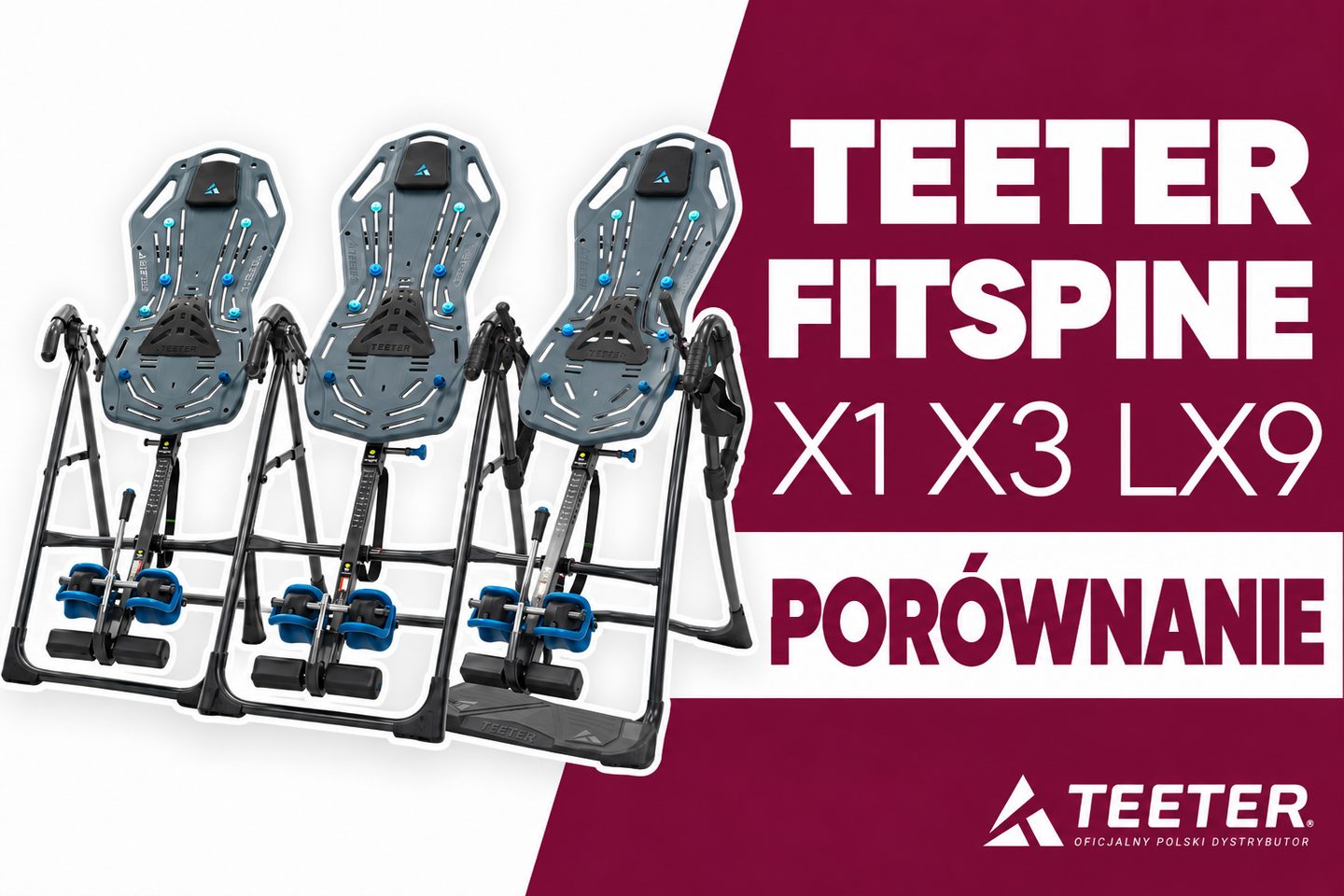
If you are comparing specific models, the guide which inversion table is best and the FitSpine X1, X3 and LX9 comparison will help. You will find all certified models in the inversion tables category.
Frequently asked questions
What does UL stand for?
Underwriters Laboratories - an independent US organization that develops safety standards and certifies products. The UL mark means that samples of the product have passed tests against the standard for the given category.
Which UL standard applies to inversion tables?
UL 1647 - the standard for massage and exercise equipment, updated in 2011 with requirements for inversion tables.
How much can a Teeter table hold?
The user limit is 136 kg. The UL 1647 standard requires a test with a 4x margin, i.e. approx. 544 kg. The margin does not change the limit - do not use the table if you weigh more than 136 kg.
Is UL certification valid in the EU?
UL is a voluntary, independent safety certification, meaningful as information about structural testing regardless of the country. The table's status as a medical device in Poland and the EU is determined by CE marking.
Are Teeter tables registered with the FDA?
In the USA they are registered with the FDA as Class I medical devices. This is a registration, not an assessment of effectiveness. In the EU they carry CE marking as medical devices.
Where can I find the UL mark on a Teeter table?
The UL listing information is on the device and in the manual. If the label is damaged or illegible, contact us and we will help you get a replacement label.
Can I modify the table or bolt my own handles onto it?
No. The manual prohibits attachments other than Teeter ones, and any modification voids the UL certification.
Are all Teeter tables UL certified?
All the Teeter inversion tables we offer - FitSpine X1, X3, LX9 and EP-560 - carry UL safety certification.
Recommended products
- Teeter FitSpine X1 - FlexTech bed with 8-point suspension and T-pin ankle lock, UL certified.
- Teeter FitSpine X3 - our most popular model, with the Deluxe EZ-Reach ankle lock and a 20/40/60° angle limiter.
- Teeter FitSpine LX9 - the flagship table with the arched LX frame, entry platform and storage caddy.
- Teeter Floor Mat - protects the floor and stabilizes the table on smooth surfaces.