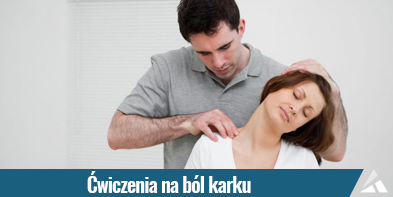
A stiff neck after a day at the computer, "rock-hard" shoulders after a long drive, trouble turning your head while parking - many people know these situations. Instead of looking for exercises that promise quick results, it is worth learning a calm, structured set of movements you can fit into an ordinary day. In this article we show gentle neck exercises step by step: a warm-up, mobility exercises, stretches and exercises that strengthen the neck and shoulder blade muscles, plus a ready-made 10-minute plan in a table. We also cover what to avoid and when you should see a doctor instead of exercising. You can read about where neck tension comes from and what symptoms it causes in a separate article, neck muscle tension - symptoms and causes.
This article is for informational purposes only and does not replace medical advice. If you have any complaints, consult a doctor.
When should you NOT exercise your neck on your own?
Before you start, check whether any of the situations below apply to you. If so - do not exercise on your own, contact a doctor instead, and if symptoms come on suddenly, call for help (112) or go to the emergency room:
- neck pain after an injury - a car accident, a fall, a blow to the head,
- numbness, tingling or weakness in one or both arms, clumsy hands,
- dizziness, disturbances of vision, speech, swallowing or balance,
- a sudden, very severe headache, especially "the worst of your life",
- neck stiffness with fever, nausea, sensitivity to light,
- constant pain that gets worse at night, with unexplained weight loss,
- a diagnosed cervical spine condition, osteoporosis or recent surgery.
It is also worth seeing a doctor when symptoms last longer than a few weeks, keep coming back or interfere with work and sleep. If you experience dizziness together with neck complaints, read our article dizziness and the cervical spine.
How to exercise your neck safely? General rules
- No pain. An exercise may give a feeling of a gentle stretch or muscles working, but not pain. If it hurts, stop.
- Slowly. Your neck does not like jerky movements. Do every movement calmly, within a range that feels comfortable.
- No full head circles. Instead of "rolling circles", do side bends, rotations and chin tucks separately.
- No forcing. When stretching, your hand should only lightly "add weight" to your head, not pull it.
- Breathe. Calm, even breathing. Do not hold your breath.
- No "cracking" or self-adjusting. Do not try to "unlock" your neck with a sudden movement, and do not ask family members to do it. If you feel the need for such a movement, consult a specialist.
- Regularly and briefly. A few minutes a day is usually easier to keep up than one long session a week.
How to prepare for the exercises? A short warm-up
The warm-up does not have to be long. 1-2 minutes is enough:
- march in place or around the apartment with relaxed arm swings,
- a few calm shoulder rolls backward and forward,
- a few deeper breaths in an upright position.
Depending on the exercise, you can do it seated (on a chair, with your feet resting on the floor), standing or lying down.
Which neck mobility exercises to do step by step?
These are calm movements within a comfortable range that help "loosen up" your neck after sitting in one position for a long time. Do each one without pain, and if you have any complaints, consult a doctor or physical therapist first.
1. Chin tucks (seated)
- Sit up straight, shoulders relaxed, looking straight ahead.
- Slowly draw your chin straight back, as if making a "double chin". Do not tilt your head down.
- Hold for 3 seconds and return. 8-10 repetitions.
The movement is small. Do it without pain, and if you have any complaints, consult a doctor or physical therapist first.
2. Head rotations
- Sitting up straight, slowly turn your head to the right, as if looking over your shoulder, only within a comfortable range.
- Return to the center and turn to the left.
- 5-8 calm repetitions per side.
Do it without pain and without dizziness. If you have any complaints, consult a doctor or physical therapist first.
3. Side head tilts
- Sitting up straight, slowly tilt your head, bringing your ear toward your shoulder. Do not lift your shoulder toward your ear.
- Return to the center and repeat on the other side.
- 5-8 repetitions per side.
Do it without pain, and if you have any complaints, consult a doctor or physical therapist first.
4. Forward head tilt and return
- Slowly lower your chin toward your breastbone until you feel a gentle stretch at the back of your neck.
- Calmly return to an upright position. Do not tilt your head far back.
- 5-8 repetitions.
Do it without pain, and if you have any complaints, consult a doctor or physical therapist first.
Which neck stretches are gentle?
5. Side neck stretch with your hand
- Sit up straight, slide your right hand under your buttock or hold the edge of the chair - your shoulder stays low.
- Tilt your head to the left and rest your left hand lightly on your head, without pulling - just its weight.
- Hold for 15-30 seconds, breathing calmly. Slowly return and switch sides.
The sensation should be mild. Do it without pain and without numbness in your arm. If you have any complaints, consult a doctor or physical therapist first.
6. Upper back stretch ("hugging a tree")
- Sitting or standing, stretch your arms out in front of you and interlace your fingers.
- Gently round your upper back, moving your shoulder blades apart, and lower your head.
- Hold for 15-20 seconds, breathing into the area around your shoulder blades.
Do it without pain, and if you have any complaints, consult a doctor or physical therapist first.
7. Chest opener
- Stand facing a door frame and rest your forearms on the frame at shoulder height.
- Take a small step forward until you feel a gentle stretch across the front of your chest and shoulders.
- Hold for 15-30 seconds. Do not arch your back.
Do it without pain and without tingling in your arms. If you have any complaints, consult a doctor or physical therapist first.
Which exercises strengthen the neck and shoulder blade muscles?
Stretching is only part of the routine. If you work sitting down, it is also worth activating the muscles that keep your head and shoulder blades well positioned. These are calm exercises without weights.
8. Chin tucks lying down
- Lie on your back with your knees bent and a thin pillow or folded towel under your head.
- Gently draw your chin back as if lengthening the back of your neck, lightly pressing the back of your head into the surface.
- Hold for 5 seconds, relax. 8-10 repetitions.
Do it without pain, and if you have any complaints, consult a doctor or physical therapist first.
9. Shoulder blade squeezes
- Sit or stand up straight with your arms by your sides.
- Gently draw your shoulder blades together and slightly down, without lifting your shoulders.
- Hold for 5 seconds, relax. 10 repetitions.
Do it without pain, and if you have any complaints, consult a doctor or physical therapist first.
10. Neck isometrics with your hand
- Sit up straight. Place your hand on your forehead.
- Gently press your forehead into your hand while resisting with your hand so that your head does not move. Use only light pressure.
- Hold for 5 seconds, relax. Repeat with your hand on the side of your head (both sides) and on the back of your head. 3-5 repetitions in each direction.
The pressure should be light. Do it without pain, and if you have any complaints, consult a doctor or physical therapist first.
11. Wall angels
- Stand with your back against a wall, feet a few to a dozen or so centimeters away from it, buttocks and shoulder blades touching the wall.
- Raise your arms bent at the elbows into a "hands up" position, forearms as close to the wall as possible.
- Slowly slide your arms up and down, only within the range in which your back stays against the wall. 6-8 repetitions.
Do it without pain, and if you have any complaints, consult a doctor or physical therapist first.
10-minute neck exercise plan - table
| Stage | Exercise | Dose (approximate) | Watch out for |
|---|---|---|---|
| Warm-up | marching, shoulder rolls | 1-2 min | relaxed pace |
| Mobility | seated chin tucks | 8-10 x 3 s | do not tilt your head |
| Mobility | rotations and side tilts | 5-8 per side | no dizziness, comfortable range |
| Stretching | side stretch with hand | 15-30 s per side | the hand only adds weight, it does not pull |
| Stretching | chest opener in a doorway | 15-30 s, 2 times | no tingling in your arms |
| Strengthening | shoulder blade squeezes | 10 x 5 s | shoulders down |
| Strengthening | isometrics with hand | 3-5 x 5 s in each direction | light pressure |
| Strengthening | wall angels | 6-8 repetitions | back against the wall |
You can do the whole plan once a day or split it into parts - for example, mobility and stretching during work breaks and strengthening exercises in the evening. If a physical therapist has recommended a different routine for you, follow their guidance.
When should you stop exercising?
Stop immediately and consult a doctor if, during or after the exercises:
- you feel sharp or increasing pain,
- the pain starts radiating to your shoulder, arm or hand,
- you feel numbness, tingling or weakness in your arm,
- you experience dizziness, spots in your vision, nausea or ringing in your ears,
- your symptoms after the exercises are clearly worse than before.
What else besides exercise? Workstation, movement and self-massage
Exercises work best as part of broader habits. Your workstation matters - monitor at eye level, keyboard close by, forearms supported. You will find details in the article how to sit at a desk, and about breaks and micro-breaks in the article ergonomic computer work. General activity also helps: walking, cycling, swimming or working out at home, for example on a FreeStep trainer, where your arms and legs work at the same time in a semi-reclined position.
Some people also enjoy self-massage. In the recovery and massage category you will find Teeter accessories, including the Neck Relax & Restore Duo for neck stretching, a massage ball and a self-massage stick. These are accessories, not medical devices - they are not intended for treatment and should be used as described on the product page.
Frequently asked questions
Which neck exercises are the safest to start with?
Most people start with calm movements within a comfortable range: chin tucks, head rotations and side tilts, as well as shoulder rolls and shoulder blade squeezes. Do them without pain, and if you have any complaints, consult a doctor or physical therapist first.
How often should you exercise your neck?
Many people do a short routine every day or a few times a week, and single movements during work breaks. Regularity matters more than session length.
Are head circles a good exercise?
Instead of full head circles, it is better to do side tilts, rotations and chin tucks separately, slowly and within a comfortable range. Full circles, especially fast ones, cause discomfort or dizziness in some people.
Should a neck stretch hurt?
No. The sensation should be mild. Pain, numbness in your arm or dizziness is a signal to stop and consult a doctor.
Can you "crack" your own neck?
We do not recommend "adjusting" your neck yourself or making sudden neck movements. If you feel your neck is locked, consult a doctor or physical therapist.
Can you do neck exercises at your desk?
Yes, most mobility and stretching exercises can be done on a chair during a work break. Save the lying-down and wall exercises for when you are at home.
When should you see a doctor about neck pain?
Urgently - after an injury, with numbness or weakness in your arms, dizziness, vision or speech disturbances, or neck stiffness with fever. As a routine visit - when symptoms last several weeks or keep coming back.
Can neck massage accessories replace exercise?
No. Self-massage accessories are an add-on, used as described by the manufacturer. They are not medical devices and do not replace movement or a consultation with a specialist.
Teeter accessories and equipment
- Teeter Neck Relax & Restore Duo - a Teeter accessory for neck stretching (details on the product page).
- Teeter Accessories - including a massage ball and a self-massage stick.
- Teeter FreeStep LT1 - a recumbent cross trainer for working your arms and legs in a semi-reclined position.