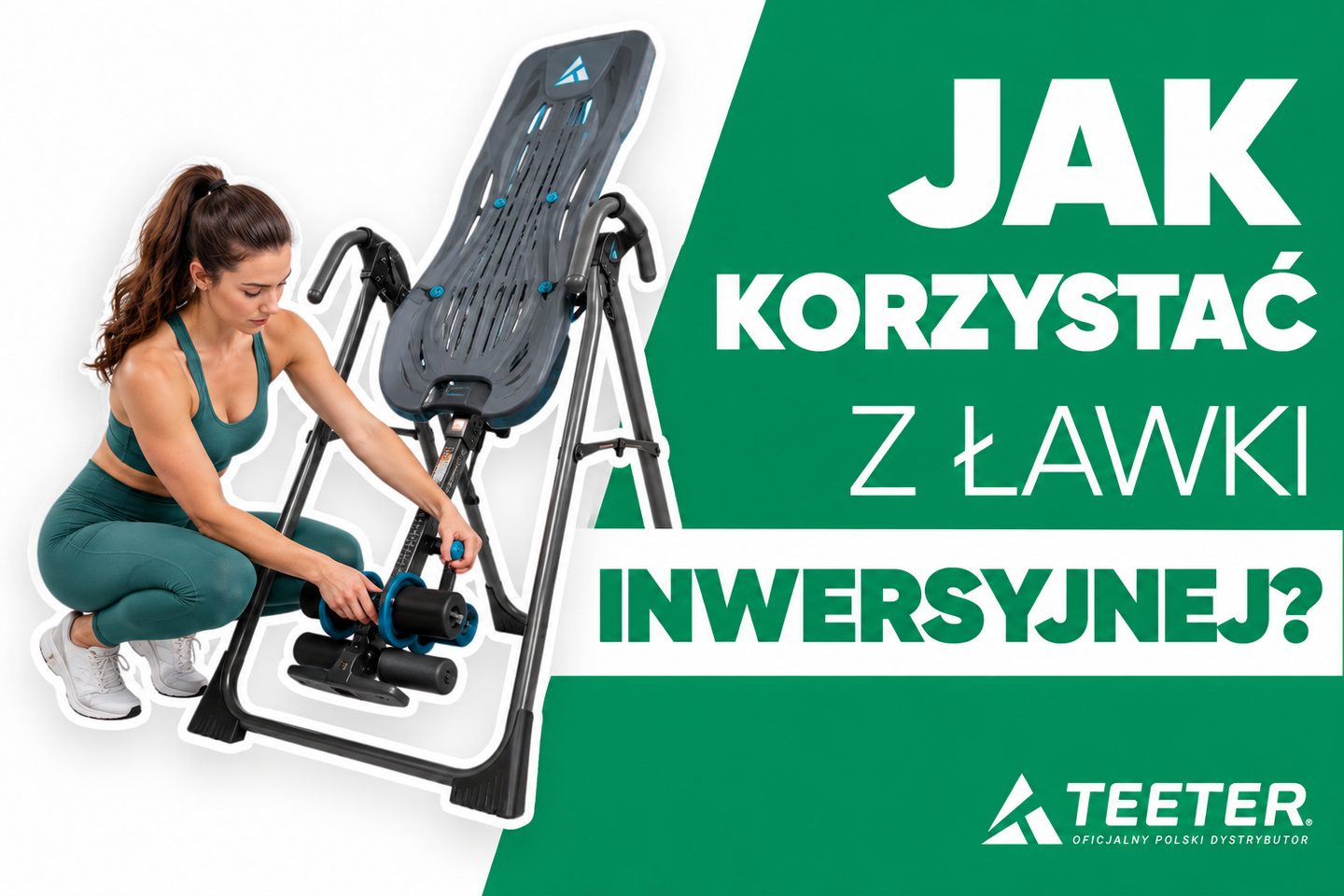
Thinking about an inversion table, but one question keeps coming up: is an inversion table safe - and is it safe for you in particular? That is a very good question, because inversion is an upside-down position, not an ordinary exercise on a mat. The table has its safety features, but it also has contraindications, which the manufacturer lists in black and white in the manual. In this article we have gathered everything worth knowing before you buy: what the table is intended for according to the manufacturer, the full list of contraindications from the manual, height and weight limits, the safety features of Teeter's design, rules for safe use, and how to store the table in a home with children and pets. No promises and no scare tactics - just what the manufacturer's manual says and what everyday customer service has taught us.
This is a medical device. Use it in accordance with the instructions for use or the label. Before you start using an inversion table, consult your doctor - this is the first and most important item on every checklist in this article.
Is an inversion table safe?
The honest answer is: an inversion table is not for everyone, and safety depends on three things at once - your health, the quality of the construction, and whether you use it exactly as the manual says.
- Health - inversion is contraindicated for many conditions (full list below). That is why the manufacturer states plainly that the table must not be used until a doctor has given clearance.
- Construction - Teeter tables carry a UL safety certification, are tested with a 4x strength safety margin, and have an ankle lock, an angle limiter and roller hinges for adjusting rotation speed.
- How you use it - correct adjustment of the table to your height and body weight, proper footwear, a balance test, and starting with small angles and short sessions. The manual notes that failure to follow the instructions and warnings may result in serious injury.
None of these three elements replaces the others. The best-designed table will not change the fact that for certain conditions the inverted position is contraindicated. And conversely - a healthy person with a good table can still get hurt if they set the main shaft incorrectly or fail to lock their ankles properly.
Medical device - what does it mean in practice?
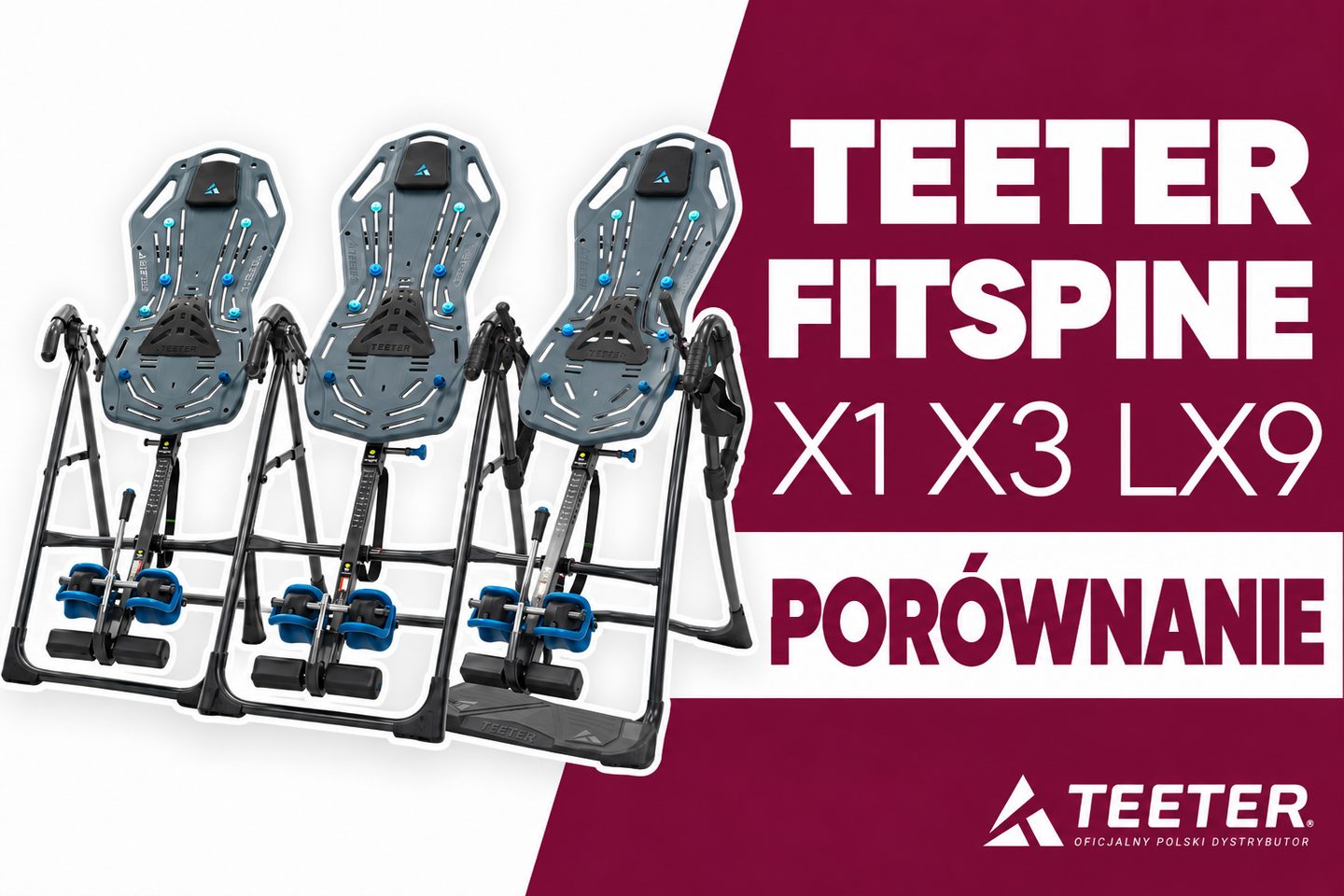
The Teeter FitSpine X1, FitSpine X3, FitSpine LX9 and EP-560 tables in our range are CE-marked medical devices. The manufacturer's EU representative is Medical Device Safety Service GmbH (Hannover, Germany). In the US, Teeter tables are registered with the FDA as medical devices - this is information about registration status, not about effectiveness. For the user, one thing matters most: a medical device has a defined intended purpose, contraindications and instructions for use that must be followed.
What is an inversion table for, according to the manufacturer?
Put simply: the table lets you rotate into a position with your head lower than your feet, at a controlled angle. Your body weight then acts in the opposite direction to when you are standing - the manufacturer calls its tables decompression devices. Below we quote verbatim how the manufacturer's manual describes the intended purpose and indications. This is a quote from the documentation, not a promise of results.
Intended purpose - quote from the manual
"Teeter decompression devices are reusable, multi-user medical devices intended for home use, providing spinal traction with simultaneous stretching of the paraspinal muscles and soft tissues. The devices provide non-powered traction and are intended for use by adults."
Source: assembly manual for FitSpine LX series inversion tables (LX1040 0920-4).
In short: it is a medical device for home spinal traction with simultaneous stretching of the paraspinal muscles and soft tissues. Two parts of this sentence are especially important when buying: "for home use" (the table is not intended for gyms, clinics or rental) and "for use by adults".
Indications - quote from the manual
"The use of Teeter decompression devices is indicated in the following cases: back pain, muscle tension, degenerative disc disease, spinal osteoarthritis, spinal stenosis, herniated disc, spinal curvature caused by muscle tension, sciatica, muscle spasms and facet joint syndrome."
Source: assembly manual for FitSpine LX series inversion tables (LX1040 0920-4).
Note one thing: some of the conditions on the list of indications (e.g. spinal curvature) also appear on the list of contraindications - in a different scope (e.g. "significant spinal curvature"). That is exactly why the decision whether inversion is right for you belongs to a doctor who knows your health. An indication listed in the manual does not mean the table is suitable in every individual case.
What are the contraindications for an inversion table?
This is the most important part of this article. Below we quote the full list of contraindications from the "Warning" section of the manufacturer's manual (FitSpine LX6-LX9 owner's manual and the LX series assembly manual - the wording is the same in both documents). We do not shorten or interpret it.
"DO NOT USE until cleared by a qualified physician. Inversion is contraindicated for any medical or health condition that could be aggravated by increased blood pressure, intracranial pressure or the mechanical stress of the inverted position, or that could adversely affect your ability to operate the device. This may include an injury or illness, but also the side effects of any medications or supplements (prescription or over-the-counter). Specific conditions may include, but are not limited to:
- any medical conditions, neurological or otherwise, that cause unexplained tingling, weakness or neuropathy, seizures, sleep disorders, light-headedness, dizziness, disorientation or fatigue, or that affect strength, mobility, alertness or cognitive ability;
- Any brain conditions, such as injury, a history of intracranial bleeding, a history or risk of transient ischemic attack or stroke, or severe headaches;
- Any heart or circulatory conditions, such as high blood pressure, hypertension, increased risk of stroke, or the use of anticoagulants (including high doses of aspirin);
- Any bone, skeletal or spinal cord conditions or injuries, such as significant spinal curvature, acute joint swelling, osteoporosis, fractures, dislocations, intramedullary rods or surgically implanted orthopedic supports;
- Any eye, ear, nose or balance conditions, such as injury, a history of retinal detachment, glaucoma, ocular hypertension, chronic sinusitis, middle or inner ear disease, motion sickness or vertigo;
- Any digestive or internal conditions, such as acid reflux, hiatal or other hernia, gallbladder or kidney disease;
- Any conditions for which exercise is specifically recommended, limited or prohibited by a physician, such as pregnancy, obesity or recent surgery."
Source: FitSpine LX6-LX9 owner's manual, "Important Safety Instructions" section.
A few practical notes on this list:
- The list is not exhaustive - the manufacturer writes "may include, but are not limited to". If you have any condition you do not see here, ask your doctor anyway.
- Medications and supplements count too - the manual mentions side effects of medications (including over-the-counter ones) and anticoagulants, including high doses of aspirin.
- Pregnancy, obesity, recent surgery - these are conditions in which a doctor decides about physical activity; the manufacturer lists them explicitly.
- Your doctor's clearance is a requirement, not a formality. Ideally, bring this list or the entire manual to your appointment.
When should you stop a session immediately?
The manual is clear: you must not continue using the table if you experience pain, light-headedness or dizziness during inversion. You should immediately return to an upright position, regain your balance and, if necessary, get off the device. The owner's manual also adds a general rule: respond to any discomfort - reduce the angle and/or time, and when you feel you have had enough, return upright.
Alcohol, medications and drowsiness
The table must not be used under the influence of alcohol, drugs or medications that may cause drowsiness or disorientation. Operating the table requires alertness - you need to control rotation with your arm movements and be able to return upright safely.
Who should not use an inversion table?
In addition to health contraindications, the manual sets out several firm restrictions regarding the user and the place of use.
| Restriction | What the manual says |
|---|---|
| User height | 142-198 cm. Do not use the device if you are taller than 198 cm. |
| User body weight | Maximum 136 kg. Exceeding it risks structural damage or striking your head/neck on the floor during inversion. |
| Children | Children must not be allowed to use the table. Intended for: adults. |
| People with reduced physical, sensory or mental capabilities | Only under supervision and following the instructions of a person responsible for their safety. |
| New users | Need help from a spotter until they have mastered the settings and rotation control. |
| Place of use | Indoor home use only. Not for commercial or institutional use or rental. Do not store outdoors. |
All four models in our range - from the EP-560 to the LX9 - have the same user range: 142-198 cm and up to 136 kg. If several people in your household will use the table, each of them must fall within this range and have their own verified settings.
What safety features does a Teeter inversion table have?
Once you know inversion is right for you (your doctor has given clearance), the second pillar of safety is construction. Here it is worth knowing what to look for - not only in Teeter, but in any table.
UL certification and strength tests
Teeter tables are listed by Underwriters Laboratories (UL). Representative samples of the product have been evaluated by UL and meet the applicable safety standards. The table is tested with a 4x strength safety margin - about 544 kg with a user limit of 136 kg. The frame is made of powder-coated welded steel, and the fasteners are made of heat-treated steel.
An important caveat from the manual: any modification of the device voids the UL certification. Do not alter the table, do not add parts from other manufacturers and do not replace original parts with substitutes.
Ankle lock - the most important element
The manual does not mince words: improperly securing your ankles may result in serious injury or death. That is why the ankle lock is the element worth examining most carefully when choosing a model.
- T-pin lock (FitSpine X1, EP-560) - a spring-loaded lock with a T-shaped handle. You can hear and see it engage.
- Deluxe EZ-Reach lock (FitSpine X3, FitSpine LX9) - an extended lever and a micro-adjustable ratchet that let you secure your feet without bending down, plus an additional gravity-activated lock. Components made of aircraft-grade steel.
- Ergo-Embrace ankle cushions and Ankle Comfort Dial (all models) - soft, wrap-around foam and a dial with a high or low setting (2.54 cm difference) so the cushions hold the narrowest part of your ankles.
Regardless of the model, the manual says to use the "Hear - Feel - See - Test" method every time:
- Hear the lock click into place.
- Feel that the handle is locked and the cushions fit snugly around the narrowest part of your ankles.
- See that the handle does not slide out of position and that there is no gap between your ankles and the cushions.
- Test - move your legs and try to pull your ankles out. Before inverting, you must be sure that you cannot remove your feet from the cushions.
Angle limiter
The limiter (a strap attached under the bed) determines how far the table can rotate. It is the basic safety feature for beginners - the manual recommends keeping it attached during your first sessions and the balance test.
- Angle Tether (X1, EP-560) - an adjustable strap with a buckle; you shorten or lengthen it to the chosen angle.
- EZ-Angle Tether (X3, LX9) - a strap with stitched color markers: 20° (green), 40° (orange) and 60° (red). You set the angle by moving the buckle to the chosen color.
Full inversion (90°) is done only after unfastening the strap - and, according to the manual, only once you have full control over rotation and can relax at 60°.
Roller hinges and main shaft
These two adjustments determine how quickly and how readily the table rotates. The roller hinges have 3 holes (settings A, B, C) - they control rotation responsiveness. The assembly manual recommends setting C to start if you are unsure. The label on the table warns: do not use setting A if you weigh more than 100 kg. You set the main shaft according to your height (details below). Incorrect settings may cause the table to invert too quickly or make it difficult to return upright.
Self-locking hooks and assembly check
The table bed is attached to the frame on pivot pins secured by self-locking hooks. The assembly manual includes a separate "Incorrect assembly check" page with drawings of typical mistakes (e.g. hinges mounted upside down or the bed installed backwards). If your table looks like those drawings, it is not fit for use until you correct the assembly.
| Safety feature | EP-560 | FitSpine X1 | FitSpine X3 | FitSpine LX9 |
|---|---|---|---|---|
| UL certification, 4x tests (about 544 kg) | yes | yes | yes | yes |
| Ankle lock | T-pin | T-pin | Deluxe EZ-Reach | Deluxe EZ-Reach |
| Angle limiter | Angle Tether | Angle Tether | EZ-Angle 20/40/60° | EZ-Angle 20/40/60° |
| Roller hinge with 3 settings | yes | yes | yes | yes |
| Ergo-Embrace ankle cushions + Ankle Comfort Dial | yes | yes | yes | yes |
| EZ-Stretch traction handles (easier return from full inversion) | - | - | yes | yes |
| Raised step-up platform | - | - | - | yes |
| User range | 142-198 cm, 136 kg | 142-198 cm, 136 kg | 142-198 cm, 136 kg | 142-198 cm, 136 kg |
You will find a comparison of all tables in the Inversion tables category, and the FitSpine models separately in the FitSpine X1-LX9 category.
How to prepare the table and yourself for your first session
The manual lists four user settings that must be adjusted to you: the roller hinges, the main shaft height, the angle limiter and the Ankle Comfort Dial. Check before every use that the table is set up for you - especially when several people use it.
Setting the main shaft
To start, set the shaft so that the last visible value is 2.54 cm (1 inch) greater than your height - e.g. at 178 cm tall, set it to 180 cm. The manual explains that this setting helps keep rotation from being too fast. The ideal value depends on your body weight distribution and may differ by a few centimeters from your actual height - which is why a balance test is needed. Always make sure the pin goes all the way through the shaft.
Footwear
Always wear securely laced, flat-soled shoes, such as ordinary tennis shoes. Do not wear thick-soled shoes, boots, high-tops or footwear that extends above the ankle - it may interfere with the lock. Socks under your shoes provide extra cushioning for your ankles.
Balance test - step by step
- Attach the angle limiter and ask a second person to assist you.
- Secure your ankles using the "hear - feel - see - test" method.
- Lean back, rest your head on the bed and keep your arms at your sides.
- With the correct setting, the table should begin to rotate slightly and the main shaft should lift a few centimeters off the crossbar.
- If the table rotates to horizontal (0°) or beyond - the shaft is too short. Carefully get off and lengthen the setting by one hole.
- If the table does not rotate at all - the shaft is too long. Get off and shorten the setting by one hole.
If you change the roller hinge setting or your weight changes significantly, the test must be repeated.
How to use an inversion table safely - rules from the manual
The rules below are the manufacturer's instructions for use, not a training plan promising results. Follow them carefully, especially in the first weeks.
| Stage | Angle according to the manual | Session time according to the manual |
|---|---|---|
| First weeks | moderate angle of 20-30°, with the limiter attached | short sessions of 1-2 minutes |
| When you feel comfortable and control rotation | gradually up to 60° (legs parallel to the rear frame legs) | gradually extended, usually about 3-5 minutes |
| Advanced (optional) | full 90° inversion - only after fully mastering 60° | as comfortable, within the manual's limits |
The manual emphasizes that many users never go beyond 60° - and that is fine. Full inversion is not a goal in itself.
Key rules in brief
- Rotate slowly - raise one arm at a time. The faster you move, the faster the table rotates.
- Do not sit up or lift your head to return upright. Instead, bring your arms to your sides, and if that is not enough - bend your knees slightly, shifting your body weight toward your feet.
- Rest after returning - pause just past horizontal (0°) for 15-30 seconds or longer before getting off the table.
- No weights, bands or sudden movements - do not use weights, resistance bands, other exercise equipment or non-Teeter attachments on the table.
- Never face down - the manual prohibits using the table in this position.
- Do not lean your upper body against the bed until your ankles are secured.
- Keep hands, hair, loose clothing and jewelry away from moving parts; do not insert anything into openings in the structure.
- Watch your elbows when returning from full inversion - keep them close to your body so they do not get pinched between the frame and the bed.
Returning from full inversion
The table may "lock" in the full inversion position when it is well balanced. To get out of it, reach one hand behind your head and grab the bed, grab the front of the A-frame base with the other hand, then pull both hands toward you. On the X3 and LX9 models, the EZ-Stretch traction handles make the return easier. For full inversion, the manual recommends hinge setting A, and setting B for a body weight of 100 kg or more.
An inversion table in a home with children and pets
This is a topic customers ask us about very often - and rightly so. The manual contains a few unambiguous rules:
- Children must not use the table - neither "just to try" nor under supervision. The table is intended for adults.
- During a session, children, bystanders and pets must stay away from the table. The rotating bed and frame are places where fingers or paws can easily get pinched.
- Do not store the table upright if there are children in the home. Fold it and lay it flat on the floor.
- A table folded upright can tip over - leave the frame legs spread 16-20 in (approx. 41-51 cm) apart or secure the table to a wall.
Locking against accidental rotation
If you leave the table unfolded and ready for use, you must secure it against unintended rotation. The manual gives two ways:
- Wrap the angle limiter strap around the main shaft and the crossbar, then fasten it with the buckle.
- Use a key lock (a manufacturer accessory).
After securing it, check by hand that the bed really cannot rotate. In an older manual, the manufacturer also states plainly: do not store the table in a room that children can access unsupervised.
What to check before buying an inversion table
Let's sum everything up in one checklist. If you can answer "yes" to every question, you can confidently choose a model.
- Doctor's clearance - has your doctor, aware of the list of contraindications, approved inversion for you?
- Height and weight - does every future user fall within the range of 142-198 cm and up to 136 kg?
- Space - do you have a level surface away from water and edges, and clear space in front of, above and behind the table? The maximum height in use according to the LX series assembly manual is about 221 cm.
- Children and pets - can you store the table flat or secure it against rotation?
- A second person's help - will someone be able to assist you during your first sessions?
- Ankle lock - is a T-pin enough for you, or would you prefer to secure your feet without bending down (Deluxe EZ-Reach on the X3 and LX9)?
- Angle limiter - do you prefer a strap adjusted with a buckle, or 20/40/60° markings?
- Documentation - does the table come with a manual, CE marking and a warranty? Tables from our store have a 5-year warranty.
Which model to choose in terms of ease of safe use?
Every Teeter table in our range has the same basic safety features: UL certification, an ankle lock, an angle limiter and a roller hinge with 3 settings. The differences concern ease of use. The EP-560 and FitSpine X1 have a T-pin lock and an adjustable angle strap. The FitSpine X3 adds the Deluxe EZ-Reach lock (no bending down), a 20/40/60° limiter and EZ-Stretch handles. The FitSpine LX9 also has the arched LX frame and a raised step-up platform that makes it easier to get on and slide your feet into the lock. You will find the classic models with the ComforTrak bed in the EP / FT series category.
Maintenance and checks before every use
Safety does not end with assembly. The manual requires that before every use you:
- check that the table rotates smoothly to full inversion and back,
- make sure all fasteners are secured,
- inspect the table for wear and damage - damaged or worn parts must be replaced immediately, and the table must not be used until repaired,
- check that the warning labels on the table are legible - if not, request new ones.
A damp cloth is enough for cleaning. The owner's manual is attached to the frame with a small chain and should stay there permanently - as a reference for every user. If you lose it or it gets damaged, write to us - we will help.
Frequently asked questions
Is an inversion table safe for everyone?
No. Inversion has contraindications listed in the manufacturer's manual - including hypertension and other heart and circulatory conditions, glaucoma, retinal detachment, osteoporosis, hernias, pregnancy and the use of anticoagulants. The table must not be used without a doctor's clearance. The user range also applies: 142-198 cm and up to 136 kg.
Do I need to see a doctor before buying an inversion table?
Yes. The manual states plainly: do not use until cleared by a qualified physician. The simplest approach is to bring the full list of contraindications from this article or the table's manual to your appointment and discuss it, taking into account any medications and supplements you take.
Can a person with high blood pressure use an inversion table?
The manual lists high blood pressure and hypertension among the contraindications, in the group of heart and circulatory conditions. Only a doctor can make the decision in your individual situation - do not use the table without their clearance.
Can an inversion table tip over on its own?
An unfolded table stands stably on its A-frame with non-slip feet - provided it stands on a level surface. The risk of tipping over applies to a table folded upright: the manual says to leave the frame legs spread 16-20 in (approx. 41-51 cm) apart or to secure the table to a wall, and to store it flat on the floor when there are children in the home.
What should I do if I cannot return to an upright position?
Do not sit up or lift your head. Bring your arms to your sides, and if that is not enough - bend your knees slightly, shifting your body weight toward your feet, and help yourself with the handles. To come out of full inversion, reach one hand behind your head to the bed and the other to the front of the frame. If the problem recurs, adjust the main shaft setting and repeat the balance test.
What angle should I start with on an inversion table?
According to the manual, start with a moderate angle of 20-30° for the first few weeks, with the limiter attached and sessions of 1-2 minutes. Larger angles (up to 60°) only once you feel confident and control rotation. Full 90° inversion is optional and only for those who have fully mastered 60°.
Can a child use an inversion table under supervision?
No. The manual prohibits allowing children to use the table - it is intended for use by adults. During a session, children and pets should stay away from the device, and when there are children in the home, the table should be stored folded and laid flat on the floor.
Does the Teeter inversion table have certifications?
Yes. The tables in our range are CE-marked medical devices, registered with the FDA in the US. They also carry the UL safety certification - representative samples have been evaluated by Underwriters Laboratories - and are tested with a 4x strength safety margin. Remember that any modification of the table voids the UL certification.
This is a medical device. Use it in accordance with the instructions for use or the label. Before first use, read the contraindications described in the manual and consult your doctor.
- Teeter FitSpine X3 - Deluxe EZ-Reach ankle lock that you secure without bending down, and an angle limiter marked at 20/40/60°.
- Teeter FitSpine LX9 - the flagship model with the arched LX frame and a raised step-up platform that makes getting on the table easier.
- Teeter FitSpine X1 - FlexTech bed, spring-loaded T-pin lock and an adjustable angle-limiting strap.
- Teeter EP-560 - a classic table with the ComforTrak bed, T-pin lock and angle adjustment.