An inversion table is equipment that stays in your home for years - and that is exactly why it is worth thinking through from the start where to put it, on what kind of floor, whether it will fit under the ceiling, how to fold and store it and which household members can use it. In this article we do not write about "benefits", only about everyday practice. We have gathered tips from the Teeter manuals and the questions we hear most often from customers after their purchase: how much space you need, which mat to use under an inversion table, how to safely leave the table unfolded, how to maintain it and how to set it up for several people of different heights. At the end you will find a table of Teeter model dimensions and answers to frequently asked questions.
Where to put an inversion table at home?
The Teeter manual sets out a few clear conditions for placement. The table is intended for home use only, indoors - not for gyms, clinics or rental, and not for outdoor storage. In addition:
- Level surface. The table must stand stably on a flat surface - not on a threshold, not on the edge of a rug and not on uneven patio tiles.
- Away from water and edges. The manual states it explicitly: do not place the table where accidental immersion or falling is possible - e.g. next to a pool, stairs or a mezzanine.
- Clearance all around. There must be enough room in front of you, above you and behind you to rotate. The table changes its footprint during inversion, so it is not enough that it "fits" in the resting position.
- Room at the sides. You get on the table from the side of the frame, so you need free access on one side and room for the arms you use to control rotation.
- Away from children and pets. The manual prohibits storing the table in a room that children can access unsupervised and requires keeping children and pets away from the device during use.
In practice, customers most often choose a bedroom, a home office, a guest room or a separate corner of the living room. The assembly manual advises assembling the table where it will be used or as close to that spot as possible - that way you avoid carrying the assembled frame through doorways and hallways.
How much space and ceiling height do you need?
Below are the dimensions given by the manufacturer for the models we offer. The "in use" dimensions refer to the unfolded table, before rotation.
| Model | Dimensions in use (L x W x H) | Folded dimensions | Table weight |
|---|---|---|---|
| Teeter EP-560 | 213.4 x 73.2 x 218.4 cm | 50.8 x 73.2 x 167.6 cm | 26.7 kg |
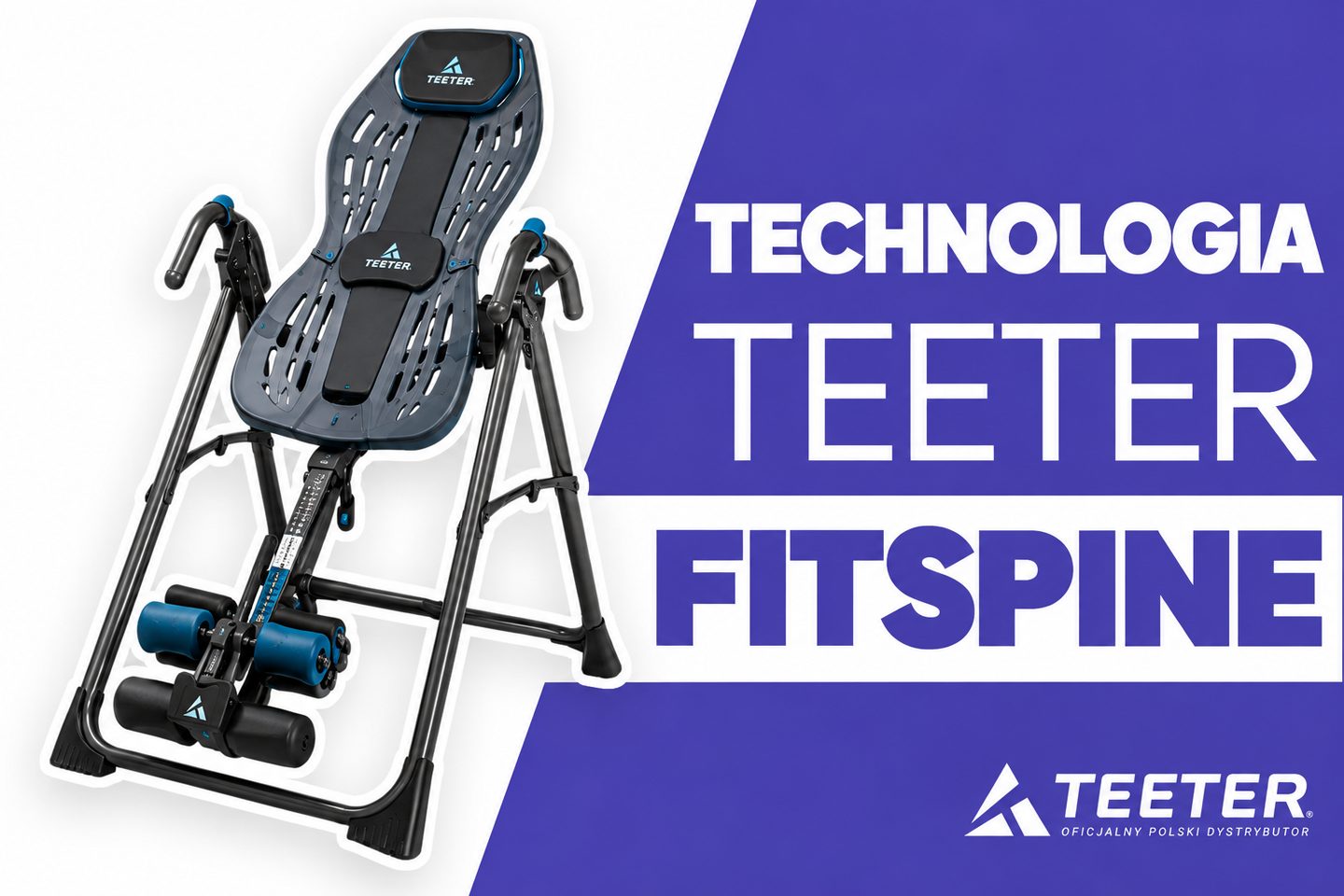
| FitSpine X1 | 205.7 x 73.2 x 219.7 cm | 50.8 x 73.2 x 167.6 cm | 27.4 kg |
| FitSpine X3 | 205.7 x 73.2 x 219.7 cm | 50.8 x 73.2 x 167.6 cm | 29.9 kg |
| FitSpine LX9 | 207.4 x 81.2 x 219.6 cm | 56.1 x 81.2 x 171.1 cm | 33.4 kg |
What this means in practice:
- Ceiling - the table in use is approx. 218-220 cm tall, so you need a room with a clearly higher ceiling. In a standard apartment this is usually not a problem, but check for sloped attic ceilings, beams, chandeliers and pendant lamps - especially above the spot where the bed rotates.
- Length - over 2 meters of free floor plus extra room in front of and behind the table for rotation.
- Width - 73.2 cm (EP-560, X1, X3) or 81.2 cm (LX9) plus room at the side for getting on and off.
Before buying, it is worth marking out this area with tape on the floor and checking that you can walk past comfortably. If you are choosing a model, the guide which inversion table is best will help.
What floor and mat for an inversion table?
A table with a user on it means several dozen kilograms of frame plus body weight concentrated on a few points where the frame touches the floor. Any level hard floor will do, but it is worth thinking about protecting it:
- Laminate and hardwood - the frame feet may leave marks over time as you get on and off. A mat protects the floor and keeps the frame from shifting.
- Tiles - they are hard and level, but can be slippery. A mat gives your feet a more stable surface when you get on the table.
- Thick carpet - soft, high pile may keep the frame from standing perfectly stable. It is better to place the table on a firmer surface or on a mat.
Teeter offers a mat with a printed exercise program which, according to the manufacturer, fits under the table and protects the floor. You will find it in the equipment mat category. By the way: a mat under the table does not replace a level surface - if the floor is uneven, choose a different spot.
How to store and fold an inversion table?
You have two options: leave the table unfolded and ready to use, or fold it after each session. Both are permitted by the manual, but each has its own rules.
Table left permanently unfolded
If you leave the table ready to use, the manual requires it to be secured against unintended rotation. The simplest way is to wrap the angle adjustment strap around the main shaft and the frame crossbar and fasten it with the buckle. The point is to keep the bed from rotating if someone accidentally catches it or leans on the table.
Folding for storage
Teeter tables fold without tools. A summary of the procedure from the manual:
- Unclip the angle adjustment strap.
- Pull out the height adjustment pin and slide the main shaft into the last hole (storage setting), then release the pin.
- Stand in front of the bed and rotate it in the direction opposite to use until it rests against the frame crossbar.
- Fold the frame into an A shape, leaving the legs spread approx. 40-50 cm apart (16-20 in. in the manual). Watch your fingers.
The manual warns of a tipping hazard: the frame must be spread wide enough to stand stably, or it must be secured to a wall. If there are children in the home, store the folded table flat on the floor, not upright. Once folded, the table takes up approx. 51 x 73 cm of floor (EP-560, X1, X3) or approx. 56 x 81 cm (LX9), so it fits behind a door, in a closet or against a wall.
After unfolding the table, remember to set the main shaft back to your height - the storage setting is not suitable for inversion.
How to care for an inversion table? Maintenance and inspection
Maintaining the table is simple, but it matters for safety. The manual recommends:
- Cleaning - wipe the table with a damp cloth. No special products are needed.
- Inspection before every use - check that all fasteners are secure and that the bed rotates smoothly to the inverted position and back.
- Ankle lock - pay attention to the condition of the foam, the latch and whether the lock closes securely.
- Replacing worn parts - replace damaged or worn parts immediately. Do not use the table until it has been repaired.
- Labels and manual - if the warning label on the table or the manual has been lost or damaged, contact the seller to have it replaced.
The manual also prohibits inserting objects into the frame openings and recommends keeping hair, loose clothing and jewelry away from moving parts. If anything worries you - knocking, play, uneven rotation - write to us before using the table again.
Who in the household can use an inversion table?
One table can serve several household members, but each of them must meet the conditions in the manual:
- Adults only - the manual prohibits children from using the table.
- Height 142-198 cm and body weight up to 136 kg - this is the range common to all the Teeter tables we offer.
- Doctor's approval - applies to each user individually. Inversion has contraindications, including high blood pressure, glaucoma, osteoporosis, hernias, pregnancy and recent surgery. We discuss them in the article on inversion contraindications.
- People with reduced physical, sensory or mental capabilities - only under the supervision of a person responsible for their safety. New users should have another person with them.
Teeter FitSpine X1, X3, LX9 and EP-560 tables are medical devices intended for home spinal traction with simultaneous stretching of the paraspinal muscles and soft tissues. This is a medical device. Use it in accordance with the instructions for use or the label.
Settings for several people
Each user has their own four settings: main shaft height, roller hinge hole, angle limiter and the Ankle Comfort Dial. The manual requires checking before every use that the table is set up for the person who is about to use it. Practical tips:
- Write down each household member's settings - e.g. on a card next to the table: shaft height, hinge hole, angle on the strap, dial position.
- The main shaft is initially set approx. 2.5 cm above your height and then adjusted after a balance test - two people of the same height may need different settings, because it depends on body weight distribution.
- Roller hinge - if household members differ significantly in body weight, they may need a different hole. After every hinge change, the manual recommends repeating the balance test.
- Angle limiter - a beginner and an experienced user need different angles. On the X3 and LX9, the strap is marked 20°, 40° and 60°.
We describe how to do the balance test and your first session in the guide how to use an inversion table.
Home safety rules - a short list
- Use the table in flat-soled, well-laced shoes - no slippers, thick-soled shoes or high-tops.
- Do not use the table face down and do not rotate before securing your ankles.
- Do not use weights, bands or other devices on the table - only Teeter accessories are allowed.
- Do not use the table under the influence of alcohol or medications that cause drowsiness.
- If you feel pain or dizziness, return to upright immediately.
- After a session, rest for a moment in the horizontal position before getting up.
Frequently asked questions
What ceiling height do you need for an inversion table?
Teeter tables in use are approx. 218-220 cm tall, so the ceiling must be clearly higher. Also check for slopes, beams and lamps above the spot where the bed rotates.
Can you keep the table unfolded?
Yes, but the manual requires securing it against unintended rotation, e.g. with the angle adjustment strap wrapped around the main shaft and the crossbar. If there are children in the home, store the table folded, flat on the floor.
Do you need a mat under the table?
It is not mandatory, but it protects the floor from frame marks and provides a more stable surface when getting on the table. The table must always stand on a level surface.
Can you put the table on a balcony or in a garage?
The manual designates the table for home use indoors and prohibits outdoor storage. A balcony or patio is out. If you are thinking about a garage or utility room, check the same conditions as in your home: a level floor, dry, away from water and edges, free space for rotation and no unsupervised access for children.
Is one table enough for two people?
Yes, if both people are within the range of 142-198 cm and up to 136 kg and have their doctor's approval. Before every use, the settings must be adjusted for the person using the table.
Can children play on the table?
No. The manual prohibits children from using the table and storing it in a room they can access unsupervised.
How to clean an inversion table?
A damp cloth is enough. More important than cleaning is the inspection before every use: fasteners, smooth rotation and the condition of the ankle lock.
How much space does a folded table take up?
Approx. 50.8 x 73.2 cm with a height of 167.6 cm (EP-560, X1, X3) or 56.1 x 81.2 cm with a height of 171.1 cm (LX9).
Recommended products
- Equipment Mat - protects the floor where the table stands every day.
- Teeter FitSpine X3 - the Deluxe EZ-Reach ankle lock and the 20/40/60° angle limiter make it easier to adjust the table for several household members.
- Teeter FitSpine LX9 - an arched frame, an entry platform and a storage caddy next to the table.
- Teeter Accessories - add-ons and parts for Teeter tables.